
As someone who’s worked remotely for years, I’ve seen firsthand the many upsides of this approach—especially the productivity gains! When COVID-19 hit, I hoped that one of its silver linings would be the broad acceptance of remote work across industries, particularly in tech. I live in Southern California, where remote work in tech still isn’t as widely embraced as it could be. Finding a contract that supports this setup is challenging, let alone a permanent position. That’s why I now prefer contract roles—they give me the flexibility to negotiate remote work.
The Shift to Remote Work During the Pandemic
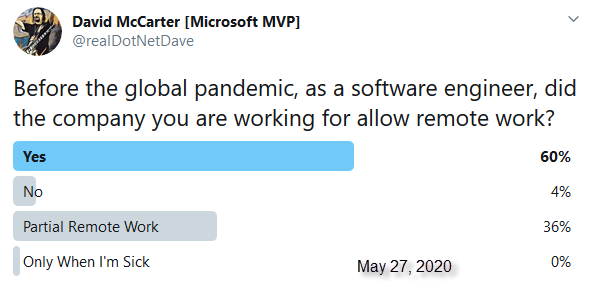
Before writing this article, I conducted a Twitter poll asking about company policies on remote work. Interestingly, 60% of respondents said their companies allowed remote work pre-pandemic. While I’m unsure where these developers are located, I can confidently say that in Southern California, that percentage feels optimistic.
When California went into lockdown, the company I was contracting for allowed all employees to work from home, with a possibility of making it permanent for developers. Major tech players like Facebook had already set this precedent. I was thrilled when the lead developer on my team told me, “I think we’re getting more work done from home!” It felt like a validation of the benefits of remote work. Our project, once at risk of running late, is now on track to finish on time—or possibly ahead of schedule.
This article is the first in a series about the benefits and challenges of remote work for software engineers, starting with one of the biggest advantages: increased productivity.
Why Remote Work Boosts Productivity
If you’re looking to work remotely, show this to your manager! Over years of experience, I’ve found that remote work enables me (and my team) to get more done. Here are some of the stories that shaped my belief in the productivity benefits of working from home.
In the early 2000s, I worked for a small consulting firm in San Diego. My first assignment was writing two chapters for a Microsoft Press book on security for the new Microsoft .NET Windows Server. Since this was a solo project, the company allowed me to work from home, which soon extended to most of my tasks. I would visit the office once a week, but primarily worked remotely—a huge help as I had recently become a single parent. While my kids may not have loved having me around more, I certainly did.
After a month of working remotely, I noticed I was completing a week’s worth of work in just two days. The reason? Fewer distractions. No constant phone calls, no office chatter, fewer meetings, and a lot more focus. Meetings over the phone back then were brief and purposeful—none of the endless, circular meetings that can plague office environments. In one previous role at Mitchell International, I called these “merry-go-round meetings” because we’d go in circles without achieving much. At one point, a fellow architect and I even walked out of a meeting out of sheer frustration.
Fewer Distractions = More Focused Work
One of the biggest time-wasters in an office is context switching. Studies have shown that when a developer is interrupted, it can take 5–30 minutes to get back into the flow. As I’ve gotten older, I’ve found it takes even longer to get back on track. Imagine this happening multiple times a day—it quickly adds up to lost productivity. Remote work minimizes these interruptions, enabling a more focused work environment.
At Mitchell International, I once debated with a manager over how much time I actually spent coding. I broke down my daily tasks on a whiteboard, showing how much time was consumed by meetings, mentoring, and other non-coding tasks, leaving me with around two hours of productive coding time. Shortly after, we moved into a large open office space with tiny cubicles, despite my warnings that it would hurt productivity. Sure enough, my output dropped by about 80%.
This trend of squeezing everyone into open spaces doesn’t suit software engineering. After moving to the new office, Mitchell was nearly at full capacity with 100% occupied parking, yet they were reluctant to allow remote work. Finally, when the office ran out of cubicles, they agreed to let my team try remote work. We were more productive—and yet, not long after, we were all laid off. Since then, that project has struggled, likely due to these misguided management decisions.
Teamwork Thrives Remotely Too
At a previous job, I was part of a small, highly effective team of three: two developers and a database analyst. Despite being spread across Chicago, San Diego, Utah, and the East Coast, we launched production-ready websites quickly using .NET beta. We never even needed to meet in person! With the right tools and communication practices, remote teams can perform just as well, if not better, than in-office teams.
Remote Work = Control Over My Environment
Working from home lets me control my surroundings. I can make my workspace as quiet as I need it to be or play music when I’m coding. If I need a break, I can go for a walk or sit by the pool. My home office is naturally bright, so I don’t need the harsh fluorescent lights common in many offices, which can cause headaches, eye strain, and even agitation.
Having worked remotely for years, it’s difficult to go back to an office setting, which I often refer to as “cube land.” My last attempt to work in an office a few years ago was a disaster. I realized I’m far more productive—and happier—working remotely.
A Loner’s Perspective on Remote Work
I’m a bit of a loner, so working alone doesn’t bother me. I enjoy seeing my friends and colleagues occasionally, but I don’t need that daily interaction to get my work done. Now that my kids are older, I don’t have family distractions, but even as a single dad with teenagers, I found that remote work made me more disciplined and efficient.
In Summary
After the COVID-19 pandemic, some tech companies, like Amazon, have mandated a return to the office, even telling employees they can quit if they disagree with the policy. Unsurprisingly, many have taken them up on this, with posts on social media detailing their decisions to leave. This approach feels short-sighted. Top engineers are likely to depart, making it challenging for these companies to retain and attract talent. The resulting impact on innovation and product quality may lead to user dissatisfaction, potentially diminishing the appeal of their products and services in the future.
What are your thoughts on remote work? Whether you’re for or against it, please share in the comments below, and stay tuned for the next article in this series!
Pick up any books by David McCarter by going to Amazon.com: http://bit.ly/RockYourCodeBooks
Make a one-time donation
Make a monthly donation
Make a yearly donation
Choose an amount
Or enter a custom amount
Your contribution is appreciated.
Your contribution is appreciated.
Your contribution is appreciated.
DonateDonate monthlyDonate yearlyIf you liked this article, please buy David a cup of Coffee by going here: https://www.buymeacoffee.com/dotnetdave
© The information in this article is copywritten and cannot be preproduced in any way without express permission from David McCarter.
Discover more from dotNetTips.com
Subscribe to get the latest posts sent to your email.

 dotNetTips.com
Great article Dave. I am a .Net developer from India. And my company has allowed work from home due to this Covid-19 situations
Awesome! Most of us do here in the United States.