
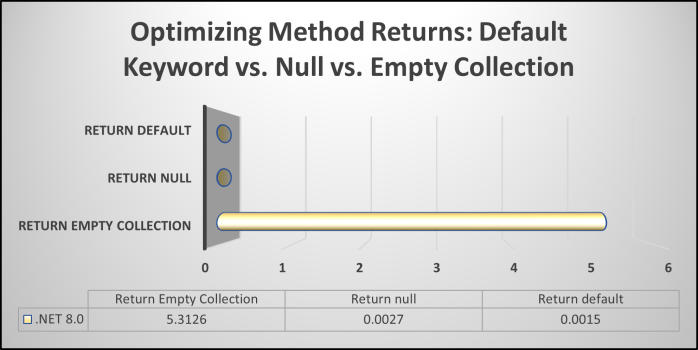
General Performance Tip: Optimizing Method Returns

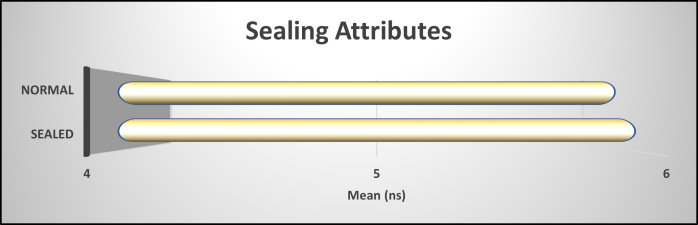
When customizing attributes, Microsoft and I both advise sealing them for clarity and performance. However, benchmark results show sealing attributes to be marginally less performant, with both outcomes indicating a memory allocation of 24 bytes. Despite this, I maintain that sealing non-inheritable classes is essential for robust class design.
General Performance Tip: Performance Impact of Sealing Attributes

When customizing attributes, Microsoft and I both advise sealing them for clarity and performance. However, benchmark results show sealing attributes to be marginally less performant, with both outcomes indicating a memory allocation of 24 bytes. Despite this, I maintain that sealing non-inheritable classes is essential for robust class design.

Collection Performance: Exploring the Performance Impacts of Array Properties

The post critiques developers’ practices of using properties that return arrays, highlighting issues like lack of encapsulation, read-only enforcement challenges, and limited flexibility for future changes. It recommends using methods or collections as alternatives, despite performance benchmarks indicating that array properties are more efficient, ultimately suggesting adherence to Microsoft's guidelines.

Encapsulation Done Right: Improving Class Property Design in Microsoft .NET

The article discusses encapsulation in Object-Oriented Programming, highlighting its importance in ensuring data integrity. It details how a developer improved class properties with proper validation and automatic updates between related properties, thus adhering to encapsulation principles. Key recommendations include using DateTime.TryParse and encapsulating business logic within property setters.