
The excerpt discusses the .NET MemoryExtensions class, which optimizes performance in byte array manipulation by offering allocation-free methods for converting to Memory, ReadOnlyMemory, Span, and ReadOnlySpan.

The excerpt discusses the .NET MemoryExtensions class, which optimizes performance in byte array manipulation by offering allocation-free methods for converting to Memory, ReadOnlyMemory, Span, and ReadOnlySpan.
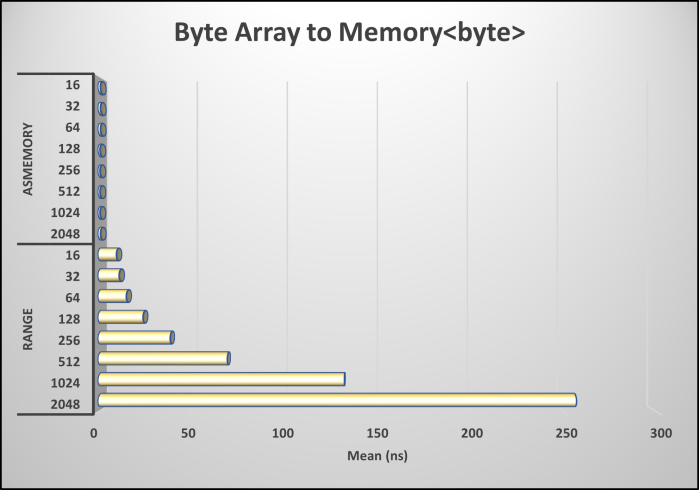
The article discusses the efficiency benefits of using AsMemory() for byte array conversion, emphasizing reduced memory usage, future-proofing code, and performance optimization. Benchmark results highlight a significant performance advantage, with a 54 times improvement compared to other methods, reinforcing the importance of AsMemory() for optimal performance in memory-sensitive applications.
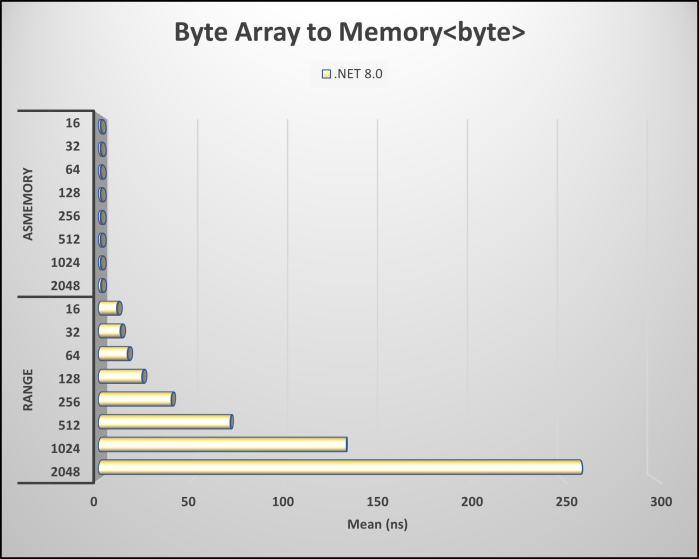
When working with byte arrays, there are two methods to convert to Memory. Using AsMemory() offers performance optimization, efficient memory management, improved code clarity, and future-proofing. Benchmark results show a 57x performance improvement, with no memory allocation. This method is crucial for memory-sensitive applications and large datasets. Utilize AsMemory() for optimal performance and efficient array handling.
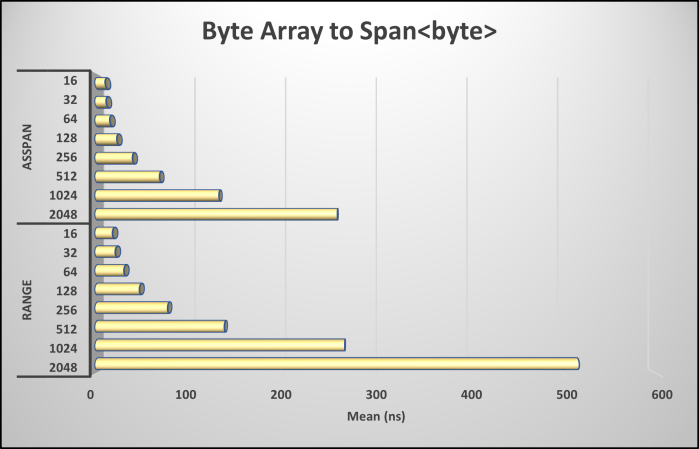
When working with byte arrays, converting to Span can be achieved through AsSpan(). This method offers performance optimization by providing direct access without creating new arrays, efficient memory management, improved code clarity, and future-proofing for .NET framework evolution. Benchmark results show AsSpan() to be twice as performant with minimal memory allocations.
 dotNetTips.com