dotNetDave Story: The Critical Importance of Addressing Performance Before Product Release

A true story illustrates the critical importance of addressing performance issues before a product launch. Despite warnings about potential negative impacts on customer experience, management dismissed these concerns. Ultimately, post-launch attempts to fix performance didn’t resolve the damage done, emphasizing that performance must be prioritized throughout the development process.

Boosting Performance and Memory Efficiency: Introducing ToDelimitedString() with Source Generators in Spargine

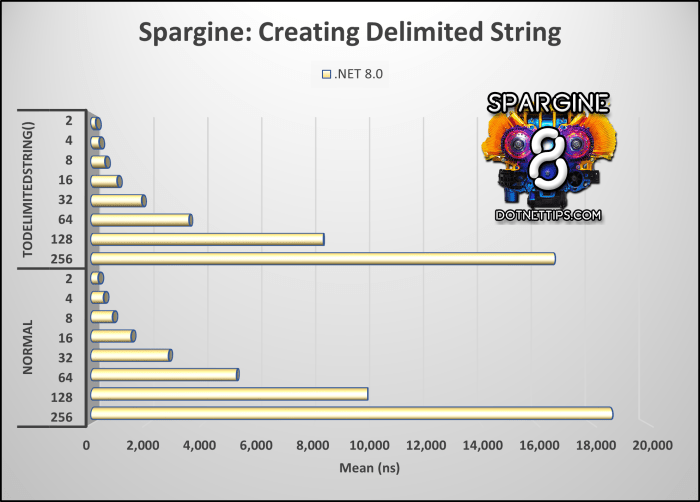
The article introduces a method called ToDelimitedString() in programming, using a StringBuilder and commas to create a delimited string. Benchmark results indicate that this method is 1.23 times more performant and allocates less memory, thanks to the utilization of a source generator in Spargine.

Optimizing String Processing in Collections: The Impact of PerformAction() in Spargine and FastStringBuilder

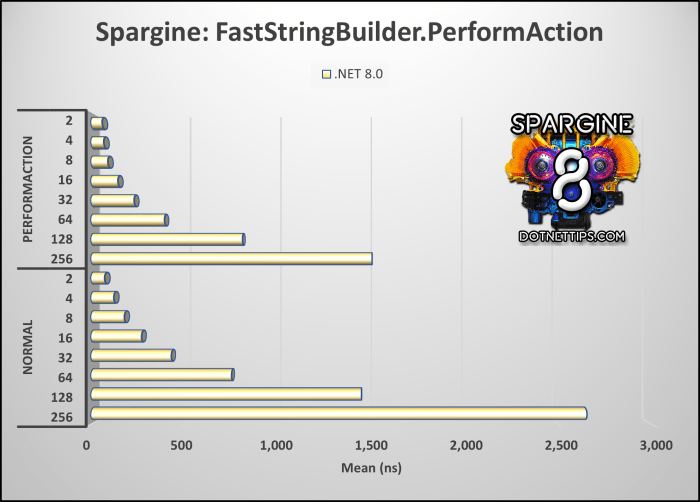
This article explores the optimization of string processing in collections through the integration of the PerformAction() method in Spargine and FastStringBuilder. Demonstrating a 1.79-fold performance increase and reduced memory allocation, the method proves to be a valuable tool for developers seeking enhanced efficiency in string manipulation.

String Performance Tip: Verifying if an Object is a String

The post explains two methods to confirm if an object is a string. It provides code examples for both methods and states that the first method is 1.17 times more efficient than pattern matching.

General Performance Tip: Constant vs Read-Only Property

It is recommended to use constants for static numerical or string values in code. This helps maintain code clarity and adhere to best practices. Benchmark tests show variables are slightly more performant than constants, but it is still advisable to use constants where appropriate to reflect the intent of the variable.

General Performance Tip: Generating Random Numbers

.NET's Random type has been a popular choice for generating random numbers. However, using RandomNumberGenerator for this purpose can result in a six-fold performance improvement, as shown in benchmark tests. Both methods allocate the same amount of memory.

Speed up Empty String Validation with Spargine

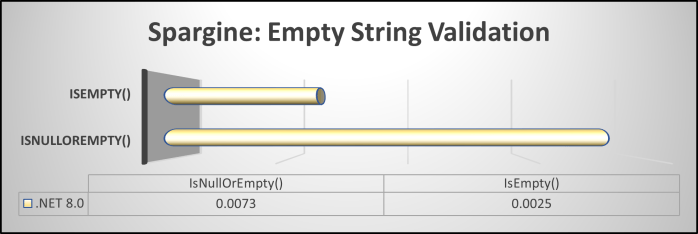
The article introduces two methods, IsEmpty() and IsNotEmpty(), for validating empty strings in Spargine, comparing them to the IsNullOrEmpty() method in .NET and emphasizing their straightforward usage and ability to handle null checks. Benchmark results reveal that IsEmpty() surpasses IsNullOrEmpty() in performance, exhibiting a 2.92 times faster execution speed.

Seamless Method Relocation: A Proposal for Visual Studio Refactoring

"Proposing a new refactoring feature for Visual Studio, this article suggests seamlessly relocating methods alongside associated code to new or existing classes. By automating this process, developers can streamline workflow, reduce manual effort, and enhance productivity."

Code It Any Way You Want: Performance of Out Variable Declaration

Starting with .NET 7, it's advised to use inline variable declarations for out parameters, enhancing performance and readability. This approach simplifies refactoring, limits variable scope, and can enable better compiler optimizations. Benchmarks indicate a 1.03x performance improvement, making code more maintainable and easier to understand.

Collection Performance: Using ForEachAsync() with List<>

The post demonstrates the usage of Parallel.ForEachAsync() with a List of reference types.