
This article compares the performance of conditional if statements, switch statements, and switch expressions in C# code, with a focus on data retrieval.
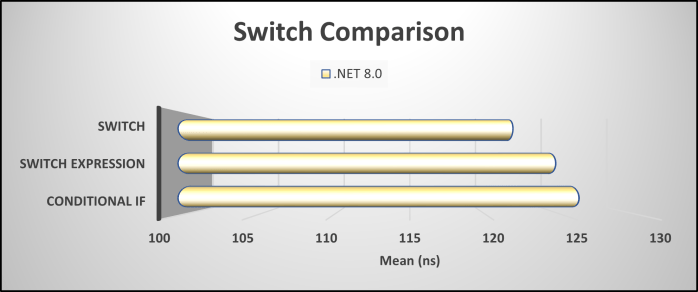
This article compares the performance of conditional if statements, switch statements, and switch expressions in C# code, with a focus on data retrieval.

To optimize .NET code effectively, developers must utilize appropriate tools like profilers and analyzers. These resources reveal hidden performance issues and inefficiencies that can affect software quality. By measuring and analyzing their code, developers can focus on impactful optimizations, ensuring their applications operate at peak performance rather than relying solely on coding skills.

Utilizing .NET code analysis tools is essential for identifying performance issues in code before execution. Modern .NET analyzers provide real-time warnings for inefficiencies, enabling developers to refine their code. This resource outlines practical examples and benchmarks, emphasizing that most performance problems stem from minor inefficiencies. Analyze, measure, and optimize for better performance.

The excerpt discusses the recommendation to seal classes in .NET for design clarity and adherence to OOP principles, while noting that benchmark tests reveal non-sealed classes perform slightly better. Despite this, the author maintains sealing classes not meant for inheritance is essential for robust class design. An EditorConfig setup for checking this is also mentioned.

.NET source generators enhance application performance by moving tasks from runtime to compile time, optimizing C# code generation. They eliminate boilerplate, reduce memory usage, and improve startup speed. By replacing reflection-heavy patterns, these generators enable faster, more efficient execution, ensuring cleaner and smarter code performance.

Serialization is a crucial aspect of modern .NET applications, enabling objects to be converted into formats like JSON for storage and transmission. Its design affects performance, memory usage, and scalability. The content emphasizes practical serialization techniques and the importance of benchmarking for efficient data movement in applications. Mastering serialization helps avoid performance bottlenecks.

LINQ is a powerful but potentially performance-hindering feature in .NET, offering a clean syntax for data querying. This content explores its inner workings, highlighting scenarios where it excels and where alternatives are more efficient. The aim is to maximize performance while leveraging LINQ, ensuring effective and rapid .NET code development.

These articles delves into performance optimization for collections in .NET, covering topics like looping, sorting, and utilizing different types of objects. The author identified performance variations related to the object type in the collection and recommends conducting benchmark tests. All recommendations are specific to .NET 8.

Globalization is essential for application development and should be integrated from the start, not as an afterthought. It encompasses more than just text translation, including nuances of languages, cultures, and data formats. Proper implementation enhances performance and user experience worldwide, while neglecting it can lead to significant difficulties and costs later.

The article outlines the author's frustration with Adobe Lightroom Classic updates, citing issues like lost edits and export failures due to catalog format changes. They urge for better testing, maintenance of user setups, and swift bug resolution. Specific grievances include vanished settings, performance decline, and incompatibility with MacMini systems. The author emphasizes the need for Adobe to prioritize user experience to retain subscribers.
 dotNetTips.com
You must be logged in to post a comment.