
The article discusses best practices for checking strings for null in coding. It outlines three common methods: using == null, is null, or string.IsNullOrEmpty().

The article discusses best practices for checking strings for null in coding. It outlines three common methods: using == null, is null, or string.IsNullOrEmpty().

To enhance the performance of .NET applications, developers should focus on mastering key techniques rather than relying on quick fixes. This resource offers a comprehensive collection of practical, evidence-based tips covering a range of topics, from memory management to coding patterns, aimed at creating efficient, robust applications ready for production.
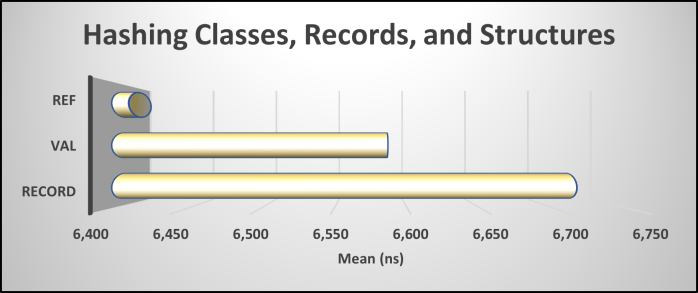
A SHA256 hash can be generated for a class, record, or structure using a specific code. Performance analysis shows that hashing a class is 1.032 times faster than a structure and 1.048 times more efficient than a record. The memory allocations for record, reference, and value types are also provided in bytes.

The post discusses the process of cloning different types of objects, with Microsoft recommending the use of JSON serialization for this purpose. The author explores the performance differences in cloning reference types, value types, and record types. Benchmark results using JsonSerializer reveal that cloning reference types is 1.015 times faster than cloning record types and 1.24 times more performant than cloning value types. The findings are shared for reference.

The content presents an alternative approach to obtaining a substring using slicing with ReadOnlySpan and AsSpan() methods.

When customizing attributes, Microsoft and I both advise sealing them for clarity and performance. However, benchmark results show sealing attributes to be marginally less performant, with both outcomes indicating a memory allocation of 24 bytes. Despite this, I maintain that sealing non-inheritable classes is essential for robust class design.

The post discusses two methods for searching a specific key in a Dictionary. The ContainsKey() method is recommended by Microsoft for improved performance but is it more performant?

The post explains two methods to confirm if an object is a string. It provides code examples for both methods and states that the first method is 1.17 times more efficient than pattern matching.

It is recommended to use constants for static numerical or string values in code. This helps maintain code clarity and adhere to best practices. Benchmark tests show variables are slightly more performant than constants, but it is still advisable to use constants where appropriate to reflect the intent of the variable.

.NET's Random type has been a popular choice for generating random numbers. However, using RandomNumberGenerator for this purpose can result in a six-fold performance improvement, as shown in benchmark tests. Both methods allocate the same amount of memory.
 dotNetTips.com
You must be logged in to post a comment.