Compound assignments in .NET have been available since its release and are the preferred way to modify numbers and strings, offering benefits such as conciseness, improved performance, and enhanced readability. By combining the operation and assignment into a single statement, compound assignment operators make the code more compact, efficient, and easier to comprehend, conveying the intention of the code clearly. Update March 2024.

Category: .NET Coding Standards
Microsoft .NET Code Analysis: The Importance of the readonly Modifier
The readonly modifier is crucial in programming for creating immutable fields, ensuring integrity and preventing unintended modifications. Its absence can introduce errors, as highlighted by 270 missing instances in a code review. Utilizing readonly enhances performance, code clarity, and thread safety, ultimately contributing to more maintainable and robust code.
Microsoft .NET Code Analysis: Remove Unread Private Members
When code is modified or removed within a class, it is common for unused private members, such as variables, methods, and properties, to remain. Removing these unused private members is essential for enhancing code readability and facilitating maintenance.
Microsoft .NET Code Analysis: Always Use Accessibility Modifiers
Accessibility modifiers are crucial in Object-Oriented Programming, influencing visibility and encapsulation of types. A recent codebase analysis uncovered 314 missing modifiers, highlighting their importance for maintaining internal implementation details, security, and code organization. Proper usage enhances maintainability, reduces errors, and aids in understanding code interactions among developers.
Microsoft .NET Code Analysis: Inline Variable Declaration
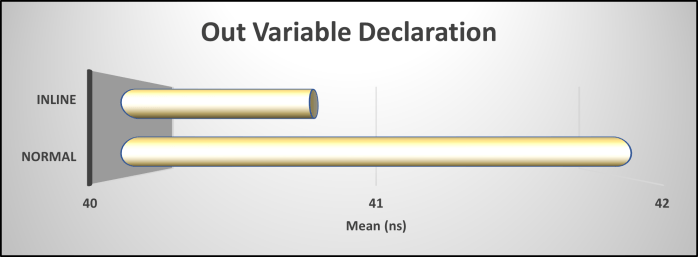
Starting with .NET 7, it is recommended to inline variable declarations when calling a method with an out parameter, as it improves code readability, reduces scope, encourages immutability, facilitates easier refactoring, and can lead to performance optimizations. Updated March 2024.
Microsoft .NET Code Analysis: Use Pattern Matching to Avoid ‘As’ Followed by A ‘Null’ Check
The introduction of the "is" keyword in .NET Framework 2.0 promotes better practices by eliminating redundant null checks. Pattern matching enhances code readability and performance, allowing type checking and extraction in one statement. Embracing this change can significantly streamline your code. For further insights, consider the author’s books and resources.
Microsoft .NET Code Analysis: Remove Unnecessary Using Directives
I always remove unnecessary using directives for a few reasons that I discuss in detail in my coding standards book and conference session. This article discusses the reasons why this is important.
Microsoft .NET Code Analysis: Eliminating Unnecessary Type Casting
Unnecessary type casting can hinder code readability and performance in .NET applications, introducing overhead and potential type-related issues. Eliminating these casts enhances clarity, maintainability, and correctness. The author identifies over 60 instances in their codebase and suggests using tools like CodeRush for efficient refactoring, along with providing an EditorConfig file for analysis.
Code Quality: Formatting Classes in Microsoft .NET to Make Them Easy to Read and Modify
This article emphasizes the importance of formatting classes in Microsoft .NET to improve readability, maintainability, and consistency. It provides guidelines for structuring class files, including headers, imported namespaces, class namespaces, constructors, events, properties, methods, and the use of blank lines for code organization. The article also recommends using documentation tools like GhostDoc and adhering to coding standards for better code quality.
Rockin’ the Code World: Special Guest Milan Jovanović
Join me on Saturday, March 18th, 2023, at 10:00 PST on C# Corner for show #76 where, for the first time, my special guest will be Milan Jovanović, Software Architect, and Content Creator. Don't miss this episode!

You must be logged in to post a comment.