
The ImmutableArrayExtensions contain a SequenceEqual() method for comparing ImmutableArray items. The method compares elements using the default equality comparer for TSource and can be used with a for() loop for performance validation.

The ImmutableArrayExtensions contain a SequenceEqual() method for comparing ImmutableArray items. The method compares elements using the default equality comparer for TSource and can be used with a for() loop for performance validation.

Developers can simplify hashing byte arrays by using HashData() instead of ComputeHash(), as it requires less code and eliminates the need to manage the SHA256 object. Benchmarking shows HashData() is about 1.16x faster than ComputeHash() and 1.02x faster than TryHashData(). EditorConfig helps manage related diagnostics.

In this investigation of object creation in .NET, various methods were explored, including "new" keyword, Activator.CreateInstance, and RuntimeHelpers.GetUninitializedObject.
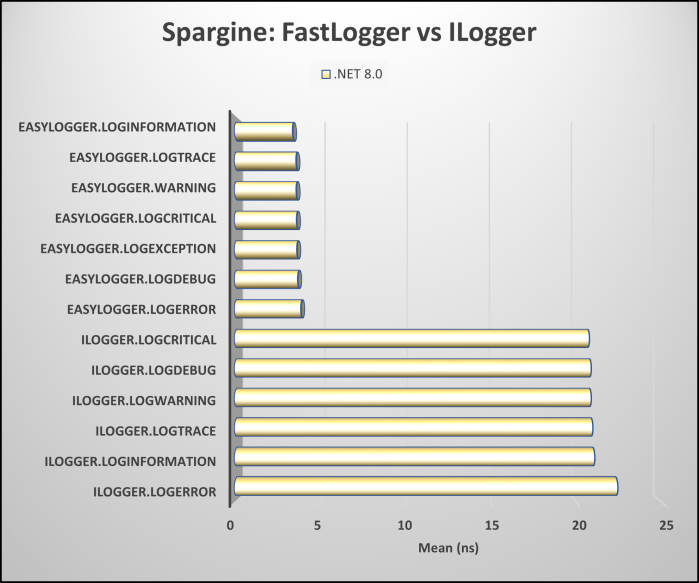
FastLogger in DotNetTips.Spargine.Core offers a simple solution to accelerate logging in applications, providing over 5 times better performance, as showcased in benchmark results. The use of source generators further emphasizes the efficiency gains achievable in code optimization.

The article announces the release of Spargine 8, a .NET 8 integrated version with updated NuGet packages. The comprehensive guide highlights new features, including a method for real-time file copying progress, additional functionalities in core, extensions, and tester libraries, along with significant transformations and breaking modifications, urging users to transition to the enhanced version for improved performance.

I'm excited to announce that, for the first time ever, the For Those About To Code: World Wide Tour will be making a virtual stop at the 2024 Warsaw IT Days event in Warsaw, Poland, taking place from April 5th to 6th!

In the analysis of code, it's noted that explicit initialization of variables, when the default state is already set, can impact performance. Situations requiring variable initialization are discussed, with examples showing unnecessary explicit initialization. The default values for reference types and the default values for properties of a custom type are also examined.

In .NET, tuples are immutable data structures that group multiple values of different types, simplifying code by avoiding custom classes. They are useful for returning or passing multiple values. Named tuples enhance readability but should not be overused. Accessing tuple elements can be done by position or via deconstruction.
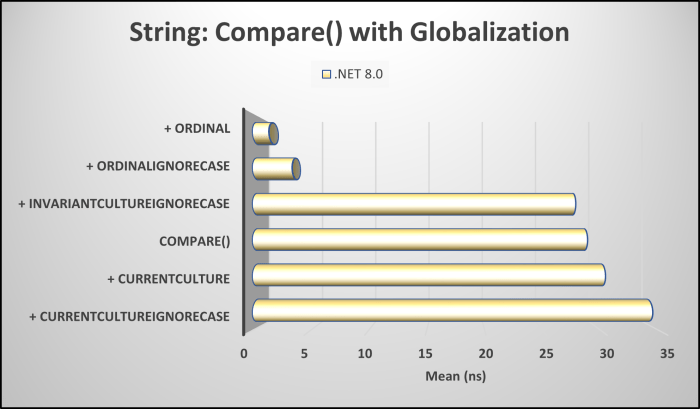
In the String Performance chapter of the code performance book, the author demonstrates the usage of string.Compare() with StringComparison. Benchmark results are provided, along with a recommendation to use cultures or ordinals based on the strings being compared. The chapter also touches on setting up EditorConfig for dotnet_diagnostic.CA1862.

The content discusses the significance of string compression in programming, outlining four available data formats and demonstrating how to compress and decompress strings using Brotli. It also mentions benchmark results and a tool called Spargine for streamlining the process. For more details, visit the provided link and subscribe for access to exclusive content.
 dotNetTips.com
You must be logged in to post a comment.