The ListExtensions class in DotNetTips.Spargine.Core enhances List functionality with high-performance methods for action execution, element addition, counting, and conversion to various collection types. It ensures reliable input validation and exception handling, aiding developers in creating efficient and maintainable code in .NET applications.

Tag: List
Coding Faster with dotNetTips.com Spargine 8: November 2024 Release
Spargine 8 was released on November 1st, 2024, featuring significant updates including NuGet packages for .NET 8. The update enhances performance with new utilities like TempFileManager, UlidGenerator, and improved JSON deserialization. Users are encouraged to explore these features and contribute feedback or suggestions to further enhance the project.
Optimizing Collection Examination: A Comparative Analysis of Predicate Methods in C#
The article explores four methods for examining items in a collection using predicates, with a focus on performance. A Twitter poll revealed that over 50% of developers favored the LINQ Any() method, prompting the author to verify its efficiency in comparison to other options like Count() and Exists().
Collection Performance: Creating a List<> Using The Task.Parallel Library
The post discusses alternative approaches to adding items to a collection using For() or ForEach() from the Task Parallel Library.
Collection Performance: Using ForEachAsync() with List<>
The post demonstrates the usage of Parallel.ForEachAsync() with a List of reference types.
Collection Performance: Comparing ImmutableArray<>’s with SequenceEqual()
The ImmutableArrayExtensions contain a SequenceEqual() method for comparing ImmutableArray items. The method compares elements using the default equality comparer for TSource and can be used with a for() loop for performance validation.
Collection Performance: Efficiently Checking for Items in a Collection
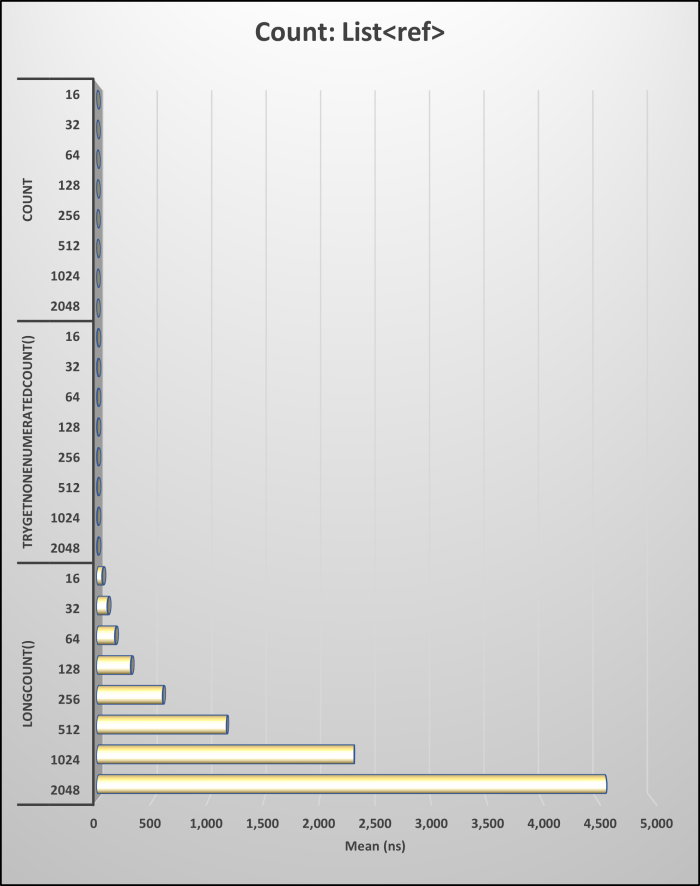
Before processing collections, always perform null and item checks. For counting items, prefer Count for speed, as it's more efficient than LongCount() and TryGetNonEnumeratedCount(). When working with arrays, use Length or LongLength instead of Count. Benchmarking is crucial for optimizing collection methods in .NET applications.

You must be logged in to post a comment.