
This is an excerpt from: Rock Your Code: Coding Standards for Microsoft .NET
Effective application design and architecture are critical to the success of any software project. Taking the time to thoroughly assess requirements and thoughtfully design an architecture before writing code is one of the most reliable ways to avoid costly mistakes later. Over the years, I’ve seen firsthand how skipping this crucial step always leads to unexpected challenges, delays, and rework.
As a seasoned professional, I’ve learned that a strong architectural foundation consistently pays dividends. When teams invest time upfront in planning, design, and documentation, they build systems that are easier to maintain, extend, and evolve. Proper planning doesn’t slow a project down—it enables smoother execution and significantly improves long-term outcomes.
Early in my career, I was once asked to deliver a solution after a single two-hour meeting—with no documented requirements. Recognizing the risk, I worked closely with project management to clarify expectations, gather requirements, and design an architecture that could realistically support the business goals. That collaboration allowed us to navigate complexity, reduce uncertainty, and ultimately deliver a successful solution.
This experience reinforced a lesson I’ve repeated throughout my career:
Rushing Into Coding Without Proper Planning Will Lead to Costly Mistakes and Delays.
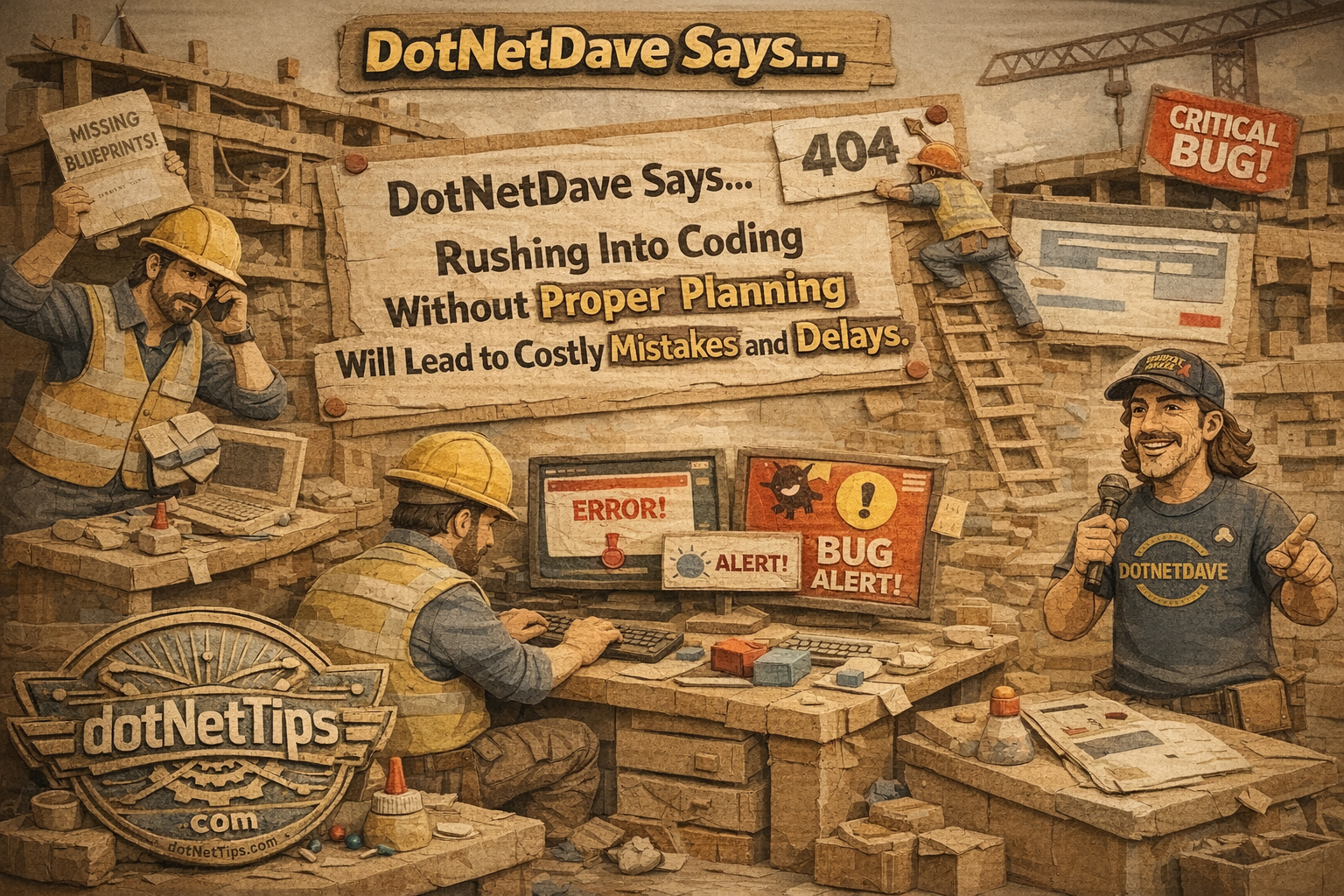
I don’t make this statement lightly. The projects I’ve worked on that invested in thoughtful planning, sound architecture, and clear documentation were successful—one even led to me becoming a patented inventor. The projects that skipped these steps struggled to meet user needs, failed to scale, or never fully succeeded at all. At the end of the day, we don’t build software for ourselves—we build it for our users.
Unfortunately, I’ve also seen modern development practices misused in ways that make this problem worse. Agile, when misunderstood or poorly applied, is sometimes treated as an excuse to skip planning entirely. I’m not advocating a return to rigid waterfall processes, but I have yet to work on a project where no upfront planning led to better results. Short sprints without architectural direction often create chaos, not agility.
Too often, managers equate productivity with constant typing—believing that if developers aren’t hunched over their keyboards all day, they aren’t working. That mindset is deeply flawed. One of my other guiding principles says it plainly: if you’re coding all day, you’re doing it wrong. Thinking, designing, collaborating, and planning are not distractions from the work, they are the work.
The shortcuts taken today will resurface tomorrow, always at a much higher cost. I’ve watched rushed decisions lead to mounting technical debt, frustrated customers, lost revenue, and competitors overtaking entire markets. In one case, I warned leadership exactly what would happen if they continued down that path. They dismissed the concern—despite my role as a senior engineer—and the outcome unfolded exactly as predicted.
It turned out I knew a lot.
So, take the time to do proper feature gathering. Create architecture and design documents. Build prototypes. Ask hard questions before writing the first line of code. This approach leads to better software, greater job satisfaction, stronger companies—and most importantly, happier users. After all, they’re the ones who ultimately pay for it.
A Hard Truth for Managers
If you measure productivity by how fast developers are typing, you are managing activity—not results.
Planning, architecture, design reviews, and requirement discussions are not delays; they are risk-reduction strategies. Every hour you “save” by skipping them will be repaid later with interest—in missed deadlines, unhappy users, lost revenue, and demoralized teams.
High-performing engineering teams don’t rush into code. They think first, design intentionally, and build with the future in mind. If you want faster delivery, better quality, and real competitive advantage, give your teams the time and space to plan properly—before the first line of code is written.
Pick up any books by David McCarter by going to Amazon.com: http://bit.ly/RockYourCodeBooks
Make a one-time donation
Make a monthly donation
Make a yearly donation
Choose an amount
Or enter a custom amount
Your contribution is appreciated.
Your contribution is appreciated.
Your contribution is appreciated.
DonateDonate monthlyDonate yearlyIf you liked this article, please buy David a cup of Coffee by going here: https://www.buymeacoffee.com/dotnetdave
© The information in this article is copywritten and cannot be preproduced in any way without express permission from David McCarter.
Discover more from dotNetTips.com
Subscribe to get the latest posts sent to your email.

 dotNetTips.com