
Because software is supposed to make life better—not harder.
As I write this from JFK Airport in New York City, I’m about to embark on my first overseas speaking trip in almost two years. After that long, hopeful pause, I honestly believed that airline websites, mobile apps, Wi-Fi systems, and airport infrastructure would have improved. That maybe, just maybe, someone finally took user experience seriously.
I was wrong.
This article focuses primarily on the technical side of travel—how software, connectivity, and digital systems shape the experience. And right now, that experience is broken. Deeply broken.
Over the last twenty years, air travel has steadily declined in comfort and usability. But the biggest casualty has been the user experience. Bad apps, unreliable Wi-Fi, disconnected systems, and rigid processes now define the journey. As a software engineer who has spent decades building high-quality systems, this is painful to watch.
Airplane Wi-Fi: Paying for Failure
Historically, airplane Wi-Fi has been unreliable at best and useless at worst. I stopped even trying years ago. But Delta gave me hope. They proudly advertised free Wi-Fi and assured passengers it was working.
It wasn’t.
I couldn’t load Gmail. I couldn’t check my international flight. I couldn’t send messages. Everything timed out. Even the flight attendants struggled to process payments for drinks and food. I tried messaging Delta support—those messages timed out too.
Why would anyone pay for this?
If Wi-Fi is critical enough to be advertised, it should actually work. Not just technically—but reliably, predictably, and at a level that meets basic modern expectations.
Airport Wi-Fi: “Blazing Fast” (Except It Isn’t)

JFK proudly promotes its Wi-Fi as “blazing fast.” My speed test showed:
- 11.59 Mbps download
- 0 Mbps upload
Zero. Upload. That explains why ChatGPT didn’t even load.
Meanwhile, my cellphone connection:
- 374 Mbps download
- 16 Mbps upload
Not amazing—but dramatically better than the airport Wi-Fi. If your marketing claims don’t survive a speed test, your UX team has already failed.
Airline Apps: A Masterclass in Frustration
Delta
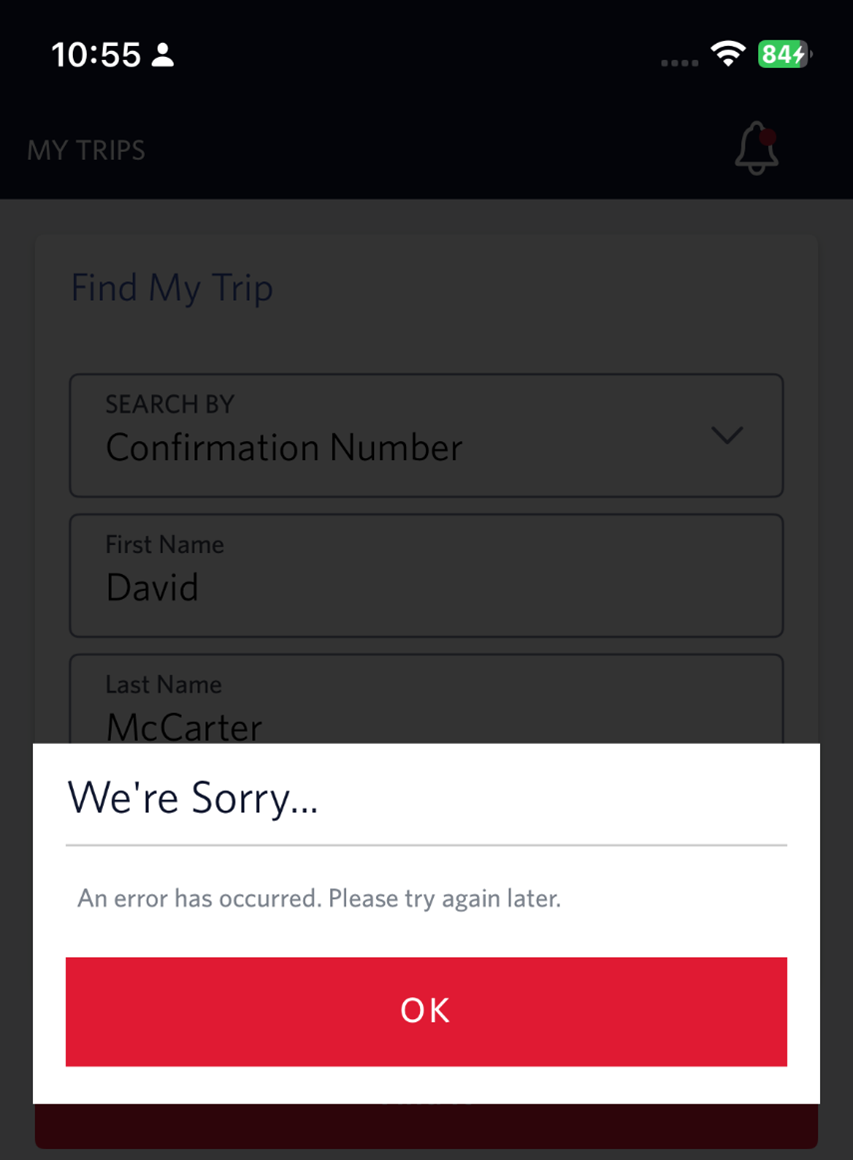
Two years ago, entering your confirmation number once saved your trip to your account. Now?
Every. Single. Time. I had to re-enter it.
Close the app? Your trip disappears.
Worse:
- I couldn’t see international seat maps.
- I couldn’t see the gate information.
- Terminal changes weren’t reflected.
- Seat upgrades made through the partner airline didn’t appear.
If airlines are partners, their systems should be too. Interoperability isn’t optional in 2026—it’s mandatory.
SAS (Scandinavian Airlines)
I expected better from a European airline. I was wrong.
Same issue:
- Trips not saved
- Confirmation numbers re-entered endlessly
- Profile creation did nothing
- No direct seat upgrades allowed
Instead, SAS uses bidding for upgrades.
Bidding. For. A. Seat.
This felt like gambling, not travel planning. I placed a reasonable bid, got outbid, rebid, got outbid again. Then while in flight—unable to check due to broken Wi-Fi—someone outbid me by $20 and SAS canceled my upgrade.
Was I bidding against real passengers? Or a bot? It honestly felt manipulative.
This is not UX. This is exploitation wrapped in UI.
T-Mobile: “Up to 256 Kbps” (In Theory)
International roaming was promised to be usable.
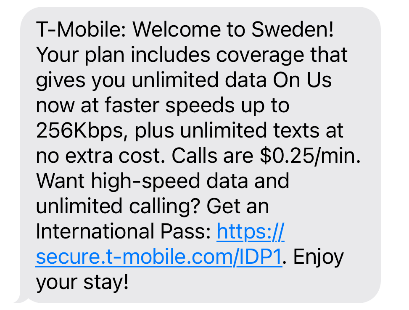
Reality:
- 0.18 Mbps
- Nothing loaded
- BlueSky showed nothing because it doesn’t cache data
Every other social media app handles slow networks gracefully. BlueSky didn’t even try. That’s a design failure.
Odds & Ends from the Trenches
- TSA at JFK was a nightmare.
- Food at the airports, especially JFK, was terrible and outrageously priced. It was actually worse than airplane food!
- Upgrades on SAS were denied because I ordered a special meal.
- Even when I said I didn’t care about the food. Even when seats were available.
- Because of “procedure.”
Procedure over people is the death of user experience.
SAS lost me as a customer because of this. Being forced into economy for eight hours is physically painful for someone of my height. Software decisions caused real-world harm.
Conclusion: Airlines Are Software Companies (Whether They Like It or Not)
Airlines may think they’re transportation companies. They aren’t.
They’re software companies that happen to move airplanes.
Their operations, revenue, customer experience, logistics, and survival all depend on software. Yet they:
- Underinvest in engineering talent
- Use outdated systems
- Design hostile user experiences
- Interview engineers with no understanding of senior-level engineering needs
(I know—I interviewed with one in 2025.)
They hold passengers hostage because we have few alternatives. But that doesn’t excuse building terrible systems.
If you feel the same:
- Contact your airline
- Post publicly
- Demand better
UX is not a luxury. It is the product.
And right now, airline UX is failing the people it serves.
Pick up any books by David McCarter by going to Amazon.com: http://bit.ly/RockYourCodeBooks
Make a one-time donation
Make a monthly donation
Make a yearly donation
Choose an amount
Or enter a custom amount
Your contribution is appreciated.
Your contribution is appreciated.
Your contribution is appreciated.
DonateDonate monthlyDonate yearlyIf you liked this article, please buy David a cup of Coffee by going here: https://www.buymeacoffee.com/dotnetdave
© The information in this article is copywritten and cannot be preproduced in any way without express permission from David McCarter.
Discover more from dotNetTips.com
Subscribe to get the latest posts sent to your email.

 dotNetTips.com