
After over 20 years of speaking at user groups, companies, high schools, colleges, code camps, and major conferences, I began to notice a pattern. While developers were always curious about the latest tools and frameworks, what truly resonated—what sparked the most growth—were the insights rooted in experience. So, I made a shift.
Instead of another talk on the newest version of a language or API, I started focusing on the human side of software engineering. One lesson I have learned and now repeat often is:
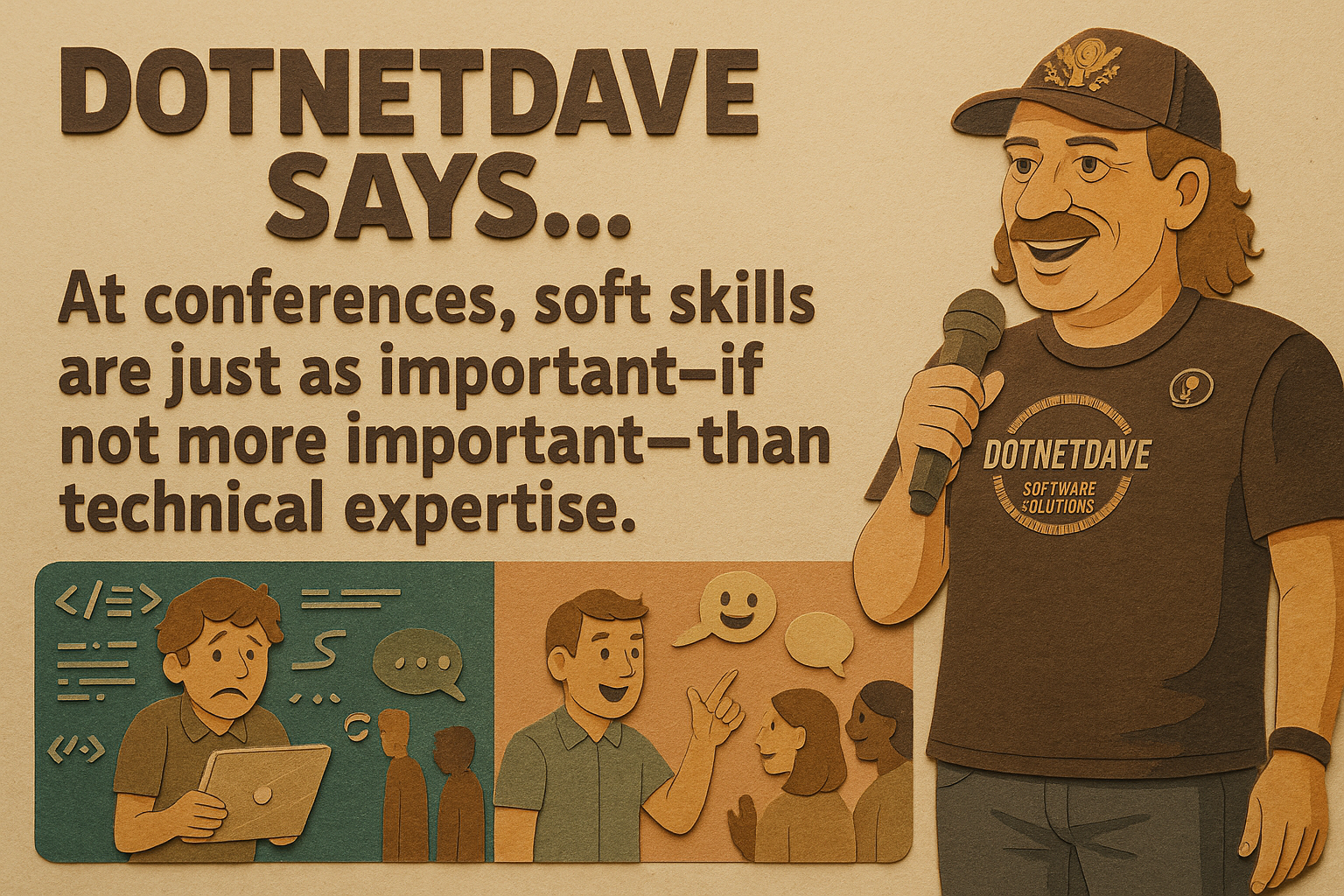
At conferences, soft skills are just as important—if not more important—than technical expertise. Your ability to communicate, listen, and connect often makes a bigger impact than code alone ever will.
I will never forget one of the first conferences I attended. The keynote speaker, who led the Microsoft Word team, gave a session that had no code at all. Instead, he shared the process of how Word was built and delivered. It was one of the most valuable sessions I attended at that conference—and I still remember the key takeaways decades later.
What Are Soft Skills in Software Engineering?
Soft skills are the human elements that enable developers to thrive: communication, empathy, adaptability, time management, conflict resolution, and collaboration. These skills help you work on teams, lead projects, and build successful products. While technical skills may land you the job, soft skills are what keep you there and help you grow.
I would even argue that concepts like object-oriented programming—when applied correctly—fall under the umbrella of soft skills. They are about mindset, discipline, and clarity—foundational traits of a great engineer.
My New Mission
Once I pivoted my focus, my mantra became:
Improving Code Quality… One Developer at a Time
But here is the reality: sessions focused on soft skills are rarely accepted at big, ticketed conferences. Why? Because they are seen as less flashy—less likely to “sell” the event.
These conferences charge anywhere from $1,000 to over $3,000 for admission, yet often offer no sessions—or maybe just one—on soft skills or developer growth. In contrast, the now-retired Silicon Valley Code Camp, a free, community-driven event that drew 2,500 attendees per day, featured over 20 soft skill sessions in 2017 alone. That is about 17% of the entire schedule—including several of my own.
Even better: at the Code Stars Summit, a pre-conference day held before the Silicon Valley Code Camp, I was invited to run a full-day workshop on how to survive the technical interview. That session? No code at all. And it has become my most popular talk ever.
What Developers Really Need
The truth is, all large conferences are driven by profit, not by developer needs. Cheaper and community-run conferences tend to be built by actual developers—people who understand what makes software (and software engineers) better.
If you believe soft skills are essential, let the conferences you attend know. Email them. Speak up. Ask for more sessions like these. Because until attendees demand it, these important topics will stay on the sidelines.
And if you do not think soft skills are important yet… trust me, you will. Every senior developer I have ever met eventually realizes that how we work together is just as important as what we build.
Summary: Code Gets You In—Soft Skills Take You Far
I am not writing this because my sessions get rejected. I am writing this because I wish someone had told me earlier in my career how critical soft skills would be. Big-ticket conferences may not prioritize these talks, but you can change that.
You are the one paying thousands to attend. You are the one investing your time to grow.
The power is in your hands. Speak up. Choose wisely. And remember—being a great developer takes more than just code.
Discover more from dotNetTips.com
Subscribe to get the latest posts sent to your email.

 dotNetTips.com
One thought on “dotNetDave Says… Soft Skills at Conferences Matter—A Lot!”