
Some time ago, I introduced a method in Spargine named PerformAction() designed to enhance the efficiency of processing data within collections. Subsequently, I integrated this method into FastStringBuilder with the aim of optimizing the speed of processing strings.
The conventional approach developers employ to concatenate a collection of words into a single string typically involves utilizing a StringBuilder:
var sb = new StringBuilder();

for (var index = 0; index < this._words.Length; index++)
{
    _ = sb.Append(this._words[index]);
}

return sb.ToString();
However, we can significantly expedite this process by leveraging PerformAction(), as illustrated below:
Action<StringBuilder> action = (StringBuilder sb) =>
{
    for (var index = 0; index < this._words.Length; index++)
    {
        _ = sb.Append(this._words[index]);
    }
};

return FastStringBuilder.PerformAction(action);
Benchmark Results
The results clearly demonstrate that using PerformAction() yields a performance increase of 1.79 times while also reducing memory allocation.
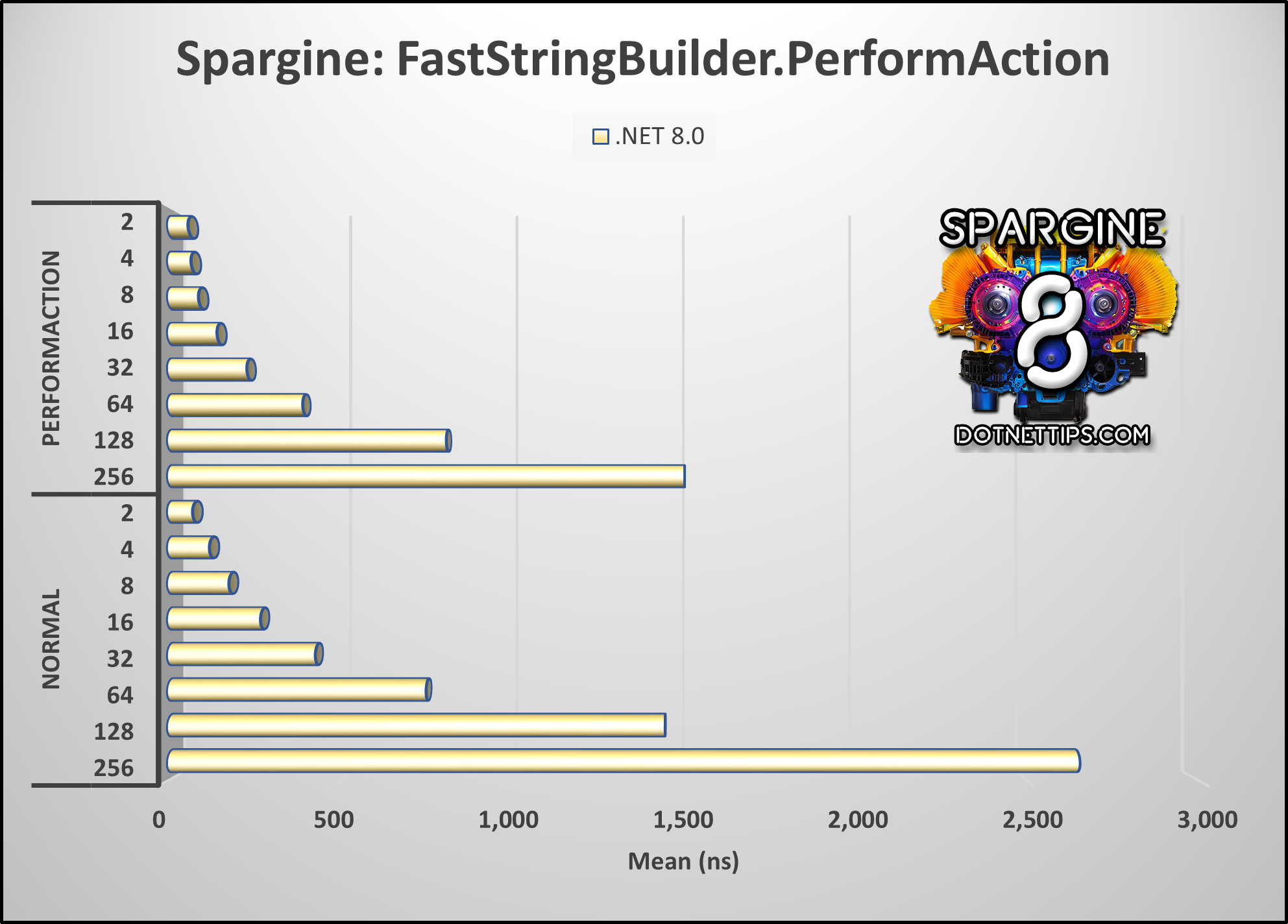


Allocations: Normal: 272 – 13,984 bytes, PerformAction(): 128 – 5,208 bytes.
Pick up any books by David McCarter by going to Amazon.com: http://bit.ly/RockYourCodeBooks
Make a one-time donation
Make a monthly donation
Make a yearly donation
Choose an amount
Or enter a custom amount
Your contribution is appreciated.
Your contribution is appreciated.
Your contribution is appreciated.
DonateDonate monthlyDonate yearlyIf you liked this article, please buy David a cup of Coffee by going here: https://www.buymeacoffee.com/dotnetdave
© The information in this article is copywritten and cannot be preproduced in any way without express permission from David McCarter.
Discover more from dotNetTips.com
Subscribe to get the latest posts sent to your email.

 dotNetTips.com