In December 2023, I penned an article titled “Beyond the Screen: The Power and Perks of In-Person Tech Conferences,” emphasizing the significance of attending conferences in person for career growth. Building on this concept, this article delves into the crucial aspect of engaging with both speakers and fellow attendees.
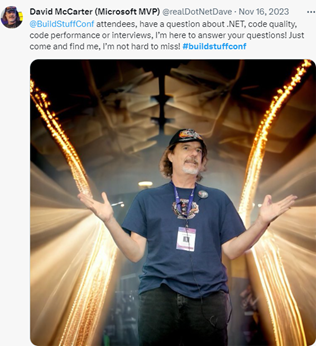
In November of that year, I had the privilege of speaking at the Build Stuff conference in Lithuania. It became apparent that not all attendees were actively engaging with the speakers outside of their scheduled sessions. Despite my efforts to foster participation by tweeting an invitation for attendees to approach me with questions on code performance or interviewing, unfortunately, I received no responses. The majority of my interactions were confined to fellow speakers and organizers.
Over my three decades of speaking at conferences, I’ve come to view it as my duty to be accessible to attendees, particularly when the event covers my travel expenses. When not occupied with speaking engagements, preparation, or rest, I proactively make myself available to attendees. I traverse the conference area, initiate conversations during lunch and other events, and attend sessions where attendees can engage with me before or after the presentation.
While some conferences go the extra mile to organize networking events, I’ve observed that attendees often stick to interacting with familiar faces. While this camaraderie is beneficial, the real value lies in seeking out unfamiliar faces, both among attendees and speakers, to gain diverse perspectives and insights.
An illustrative incident occurred during a workshop I conducted at a Code Camp in Philadelphia, Pennsylvania. I encouraged attendees to approach unfamiliar attendees during lunch for conversations. To my chagrin, after shutting down my computer and heading to the lunch area, I found my attendees conversing exclusively among themselves. Post-lunch, I had to remind them that they had inadvertently overlooked my advice.
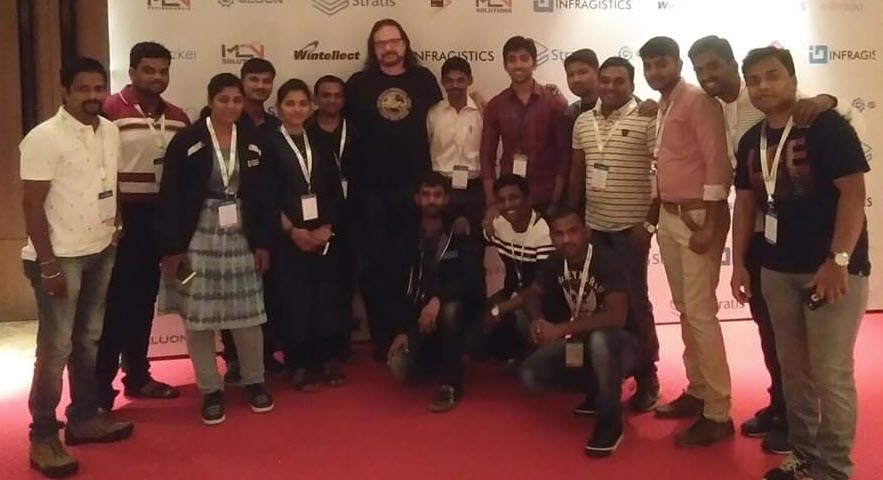
Having spoken in various states in America and internationally, I’ve recognized that reluctance among attendees to interact can be influenced by cultural factors. In India, for instance, I’m often swarmed by attendees eager to engage or take selfies, requiring occasional retreats to my hotel room for a breather – a challenge given my introverted nature. Conversely, conferences in countries like Lithuania and Denmark present a different dynamic, where interaction may require more encouragement.
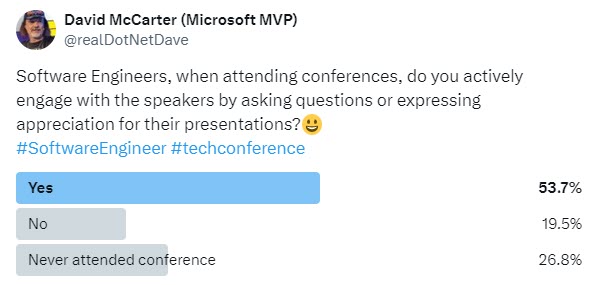
I conducted a Twitter poll to explore attendee engagement with speakers at conferences. Surprisingly, the majority voted “yes,” contrary to my observations at events. Additionally, it’s concerning that nearly 30% of respondents haven’t attended an in-person conference. I hope this article, along with the one referenced earlier, serves as inspiration for both individuals and their employers. Attending in-person conferences is not only crucial for professional development but also essential for delivering high-quality apps and services that resonate with users.
Connect with the Speakers!
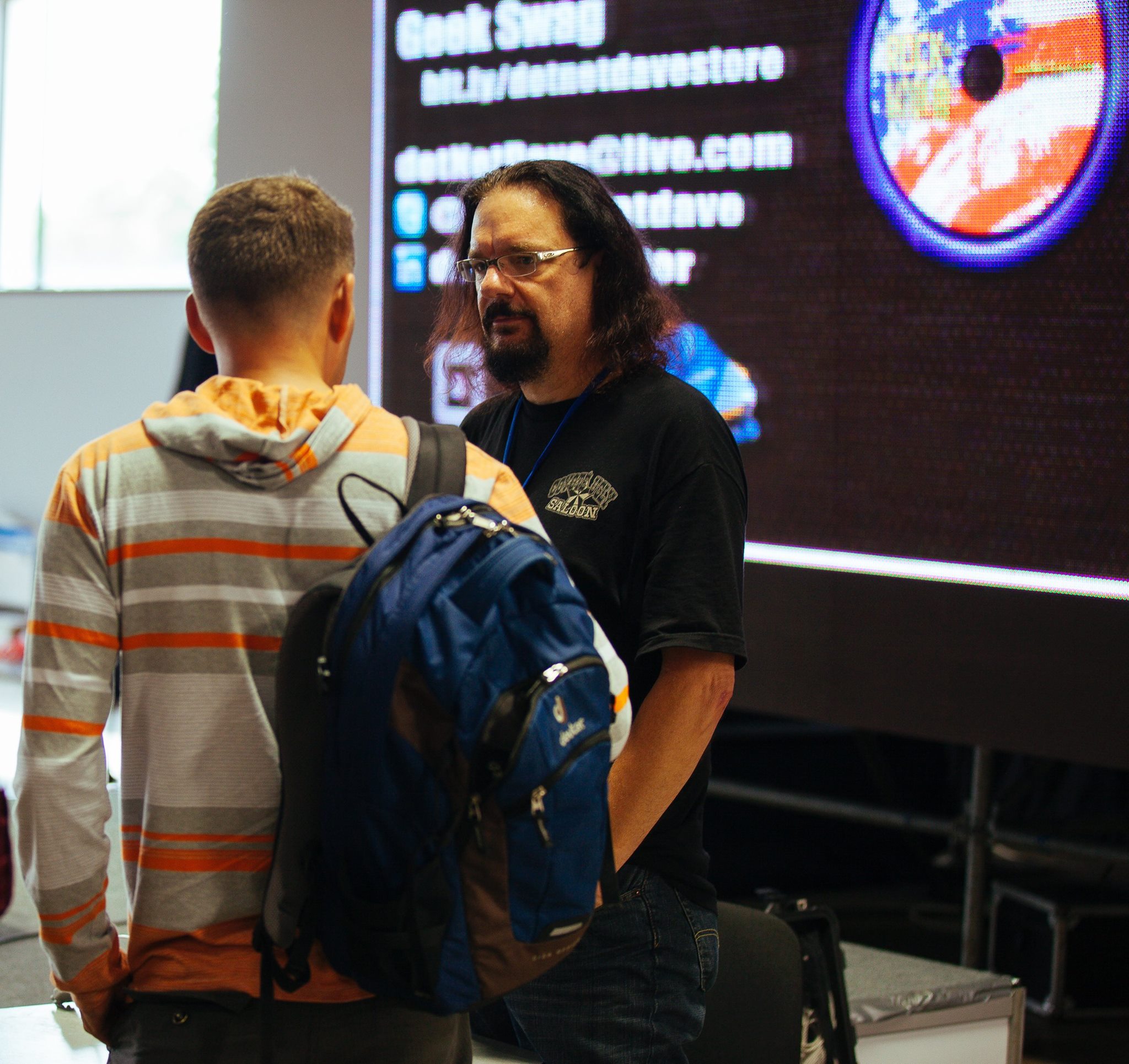
Consider this: at every conference, a multitude of speakers bring with them hundreds of years of collective experience. Seize the opportunity to tap into this wealth of knowledge to benefit your projects and career. If you encounter a specific challenge, such as with Azure, seek out the speakers who addressed that subject—they may have the solution or know someone who does. In my case, feel free to inquire about anything related to .NET, code quality, code performance, interviewing, and more!
Breaking the ice with a speaker you’re unfamiliar with can be as simple as approaching them after their session and expressing your appreciation for their presentation. Trust me, speakers thrive on positive feedback! Additionally, consider sharing your thoughts on sessions through tweets. This not only serves as valuable feedback but also helps speakers gauge their impact, as official feedback is often lacking.
If you’re hesitant about approaching a speaker, attending after-hours events like parties or entertainment can create a more relaxed atmosphere. This is particularly true after a few drinks. If the bar is not an open bar (free drinks), consider offering to buy a drink for the speaker as a gesture of appreciation. When approaching speakers deep in conversation, wait for an opportune moment to avoid interrupting.
If you fear asking a “dumb” question, remember that there are no dumb questions—only those too afraid to ask. Be prepared for the possibility that the speaker might not have the answer. In my case, if I’m uncertain, I likely know someone who can assist, and as a Microsoft MVP, I can even reach out to my contacts at the company or fellow MVPs.
I can attest that these strategies work, as I began implementing them at my first major conference when I was a more introverted software engineer. Despite initial shyness, the effort paid off significantly.
Reflecting on my experience, I met Robert Scoble, an organizer of the Visual Basic Insiders Summit, at my first conference. This connection led to opportunities like writing for the Visual Basic Programmers Journal and eventually speaking at VBITS. I also crossed paths with Carl Franklin, a host of the popular .NET podcast .NET Rocks, and developed a lasting friendship. Carl and I even entertained VBITS attendees with our guitar performances. While not all speakers share my approachability, persistence can yield positive results. If a speaker appears unresponsive, don’t be discouraged—keep trying. A little effort goes a long way in building meaningful connections.

Engage with Fellow Attendees!
In addition to the valuable insights speakers offer, don’t overlook the diverse experiences that fellow attendees bring to the table. I’ve personally found immense value in connecting with other conference-goers to navigate challenges at work. As mentioned earlier, don’t hesitate to strike up conversations with attendees you’re unfamiliar with—whether it’s during breaks, over lunch, or at post-conference gatherings. You’d be surprised how often a casual conversation can provide valuable information and perspectives.
Listening is a powerful tool during these interactions. Taking the time to hear the experiences and perspectives of other attendees, be it during meals or after-party discussions, can yield unexpected insights. These casual exchanges may not only help you with immediate work challenges but could also lead to the discovery of a new friend or professional contact.
Remember, the conference environment is conducive to networking, and fellow attendees can be a goldmine of knowledge and support. So, don’t be shy—initiate conversations, share your experiences, and be open to the wealth of insights that your fellow conference-goers bring to the table. You never know where these connections might lead or what valuable information you might gain along the way.
In Conclusion
I trust that this article has motivated you to actively engage with speakers and fellow attendees at conferences. While I understand that this may pose a challenge for many engineers, I can assure you that the effort invested will prove fruitful, contributing to your growth as a more proficient and content software engineer.
On another note, if you find that a conference lacks networking events, don’t hesitate to communicate this to the organizers. Your feedback can be instrumental in enhancing future conferences. Similarly, if your company doesn’t currently support conference attendance, advocate for this opportunity. Convey the value of in-person conferences and the impact they can have on your professional development. If your current workplace remains unresponsive, it might be worth considering alternative positions in companies that recognize the importance of such experiences. Good, well-run software companies acknowledge the significance of in-person interactions, an element often missing in virtual conferences, a sentiment I share as a speaker and attendee.
I eagerly anticipate the possibility of crossing paths with you at a future conference. Please share your thoughts and insights in the comments below; your feedback is always welcome and invaluable. Safe travels on your journey to becoming a better and more fulfilled software engineer!


Pick up any books by David McCarter by going to Amazon.com: http://bit.ly/RockYourCodeBooks
Make a one-time donation
Make a monthly donation
Make a yearly donation
Choose an amount
Or enter a custom amount
Your contribution is appreciated.
Your contribution is appreciated.
Your contribution is appreciated.
DonateDonate monthlyDonate yearlyIf you liked this article, please buy David a cup of Coffee by going here: https://www.buymeacoffee.com/dotnetdave
© The information in this article is copywritten and cannot be preproduced in any way without express permission from David McCarter.
Discover more from dotNetTips.com
Subscribe to get the latest posts sent to your email.

 dotNetTips.com