
I’ve written, spoken, and even taught at a university about one undeniable truth of the software world: it changes every single day. Staying current is not optional—it’s critical. A professor of mine once called this relentless evolution “techno stress.” I feel that stress at 110%.
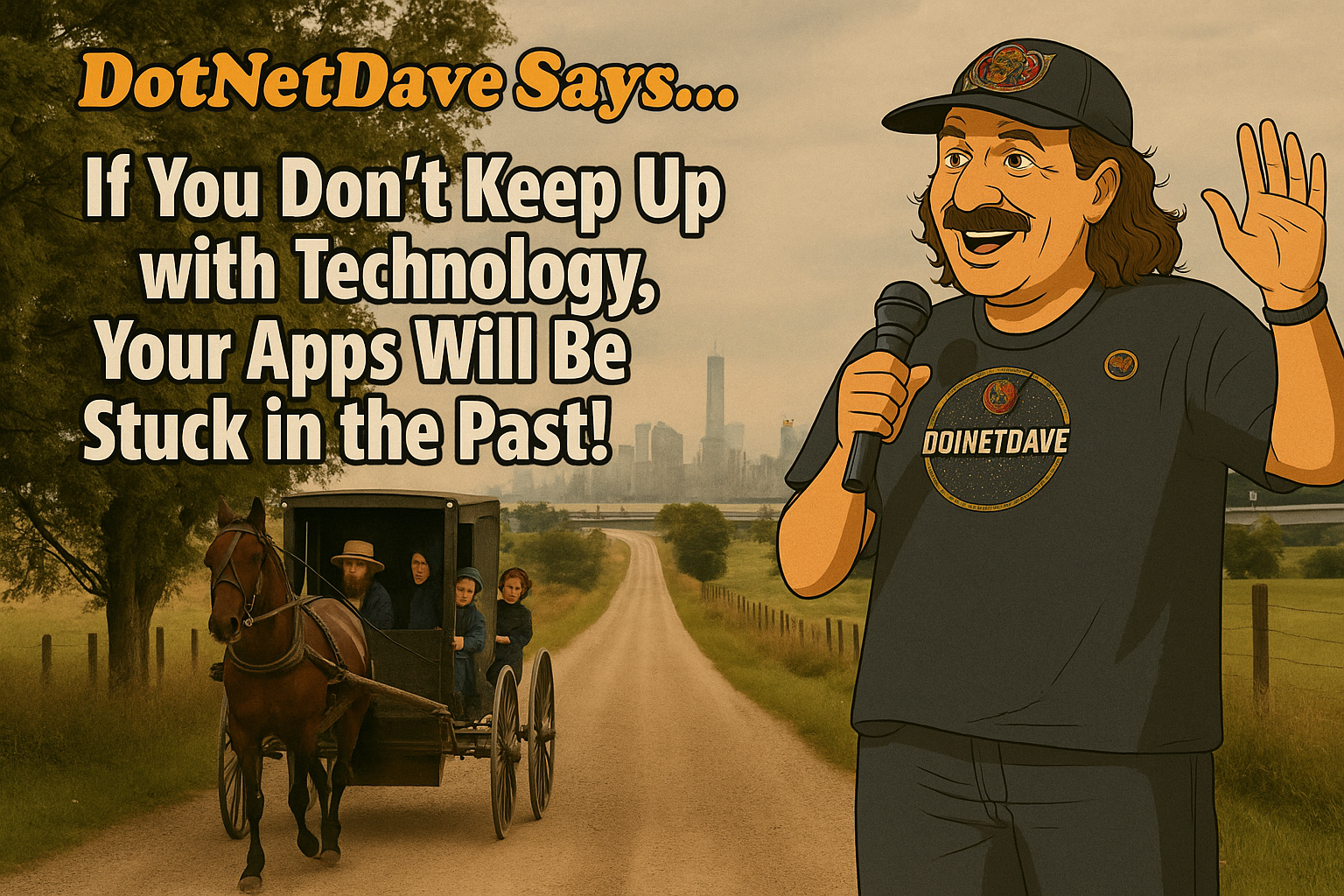
WARNING: If you’re not actively learning and adapting outside of work, you’re falling behind. Fast.
This isn’t just advice for beginners—this is mandatory for all software professionals, no matter your experience level. When you fall behind, so does your team. And when your team lags, your software becomes outdated, brittle, and increasingly difficult to maintain. Eventually, it reaches a point where change is impossible without a massive rewrite.
Worse yet, your career options shrink. Great jobs will slip through your fingers simply because your skill set is stuck in yesterday’s tech.
Let me give you a real-world example. At one contract I joined, the project was stuck—at least a decade in the past. They were using frameworks that were no longer supported and source control methods that most modern teams have long abandoned. Their source control workflow was so convoluted, it caused constant delays and unnecessary pain. I’ve never seen more wasted engineering hours.
This was the largest team I’ve ever worked on, and ironically, it felt like it took more people just to keep the system afloat. Most of them were outsourced, and every feature or bug fix took 10 times longer than it should. That means massive amounts of money wasted—by the company and ultimately, their customers.
And it gets worse. The architecture—if you can even call it that—was a mess. Yes, there were unit tests… but we couldn’t even run them locally. On my machine, over 800 tests fail every time. That makes it nearly impossible to validate any changes before committing. Most of the time, my commits broke something—even when they shouldn’t have.
Add to this the company’s revolving-door hiring policy: hiring contractors, firing them, then re-hiring them again and again. It creates instability and knowledge gaps that further entrench the project in technical debt. The end result? A codebase frozen in time—and the users are the ones who suffer. Literally.
The Takeaway
You must stay current—with tools, with architecture, with development standards. If you don’t, you’ll find yourself and your codebase trapped in the past. That’s bad for your product, bad for your users, and potentially catastrophic for your career.
Keep learning. Stay sharp. Don’t get left behind.
Pick up any books by David McCarter by going to Amazon.com: http://bit.ly/RockYourCodeBooks
Make a one-time donation
Make a monthly donation
Make a yearly donation
Choose an amount
Or enter a custom amount
Your contribution is appreciated.
Your contribution is appreciated.
Your contribution is appreciated.
DonateDonate monthlyDonate yearlyIf you liked this article, please buy David a cup of Coffee by going here: https://www.buymeacoffee.com/dotnetdave
© The information in this article is copywritten and cannot be preproduced in any way without express permission from David McCarter.
Discover more from dotNetTips.com
Subscribe to get the latest posts sent to your email.

 dotNetTips.com
One thought on “dotNetDave Says… If You Don’t Keep Up with Technology, Your Apps Will Be Stuck in the Past!”