
Updated February 2024
There are three primary methods to examine the presence of a string within another string. These methods, derived from the string type, are:
StartsWith()EndsWith()Contains()
Here is an example illustrating the usage of Contains().
bool result = "David McCarter".Contains("David");
Benchmark Results
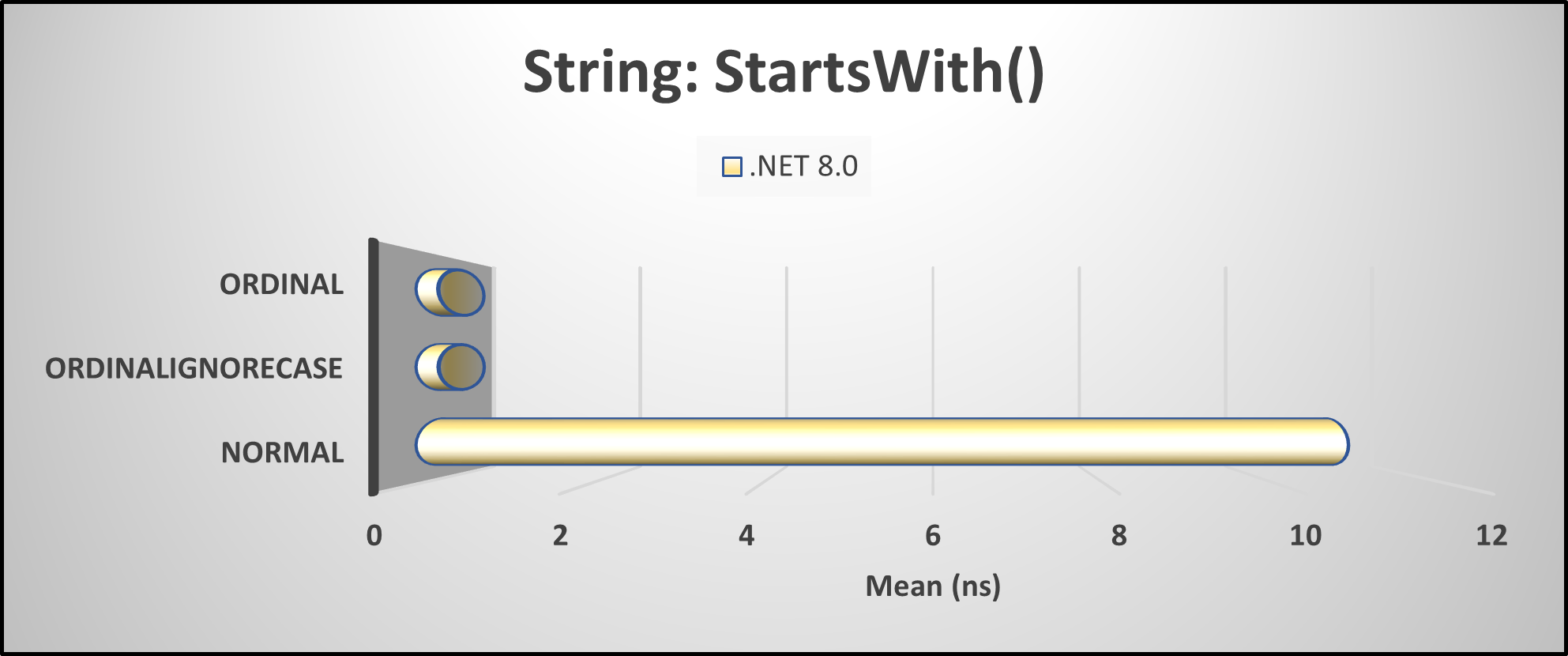
When employing StartsWith(), utilizing it with StringComparison.Ordinal and StringComparison.OrdinalIgnoreCase yields nearly identical speeds. Additionally, employing Ordinal is 42.38 times more efficient than using it without specifying a StringComparison.
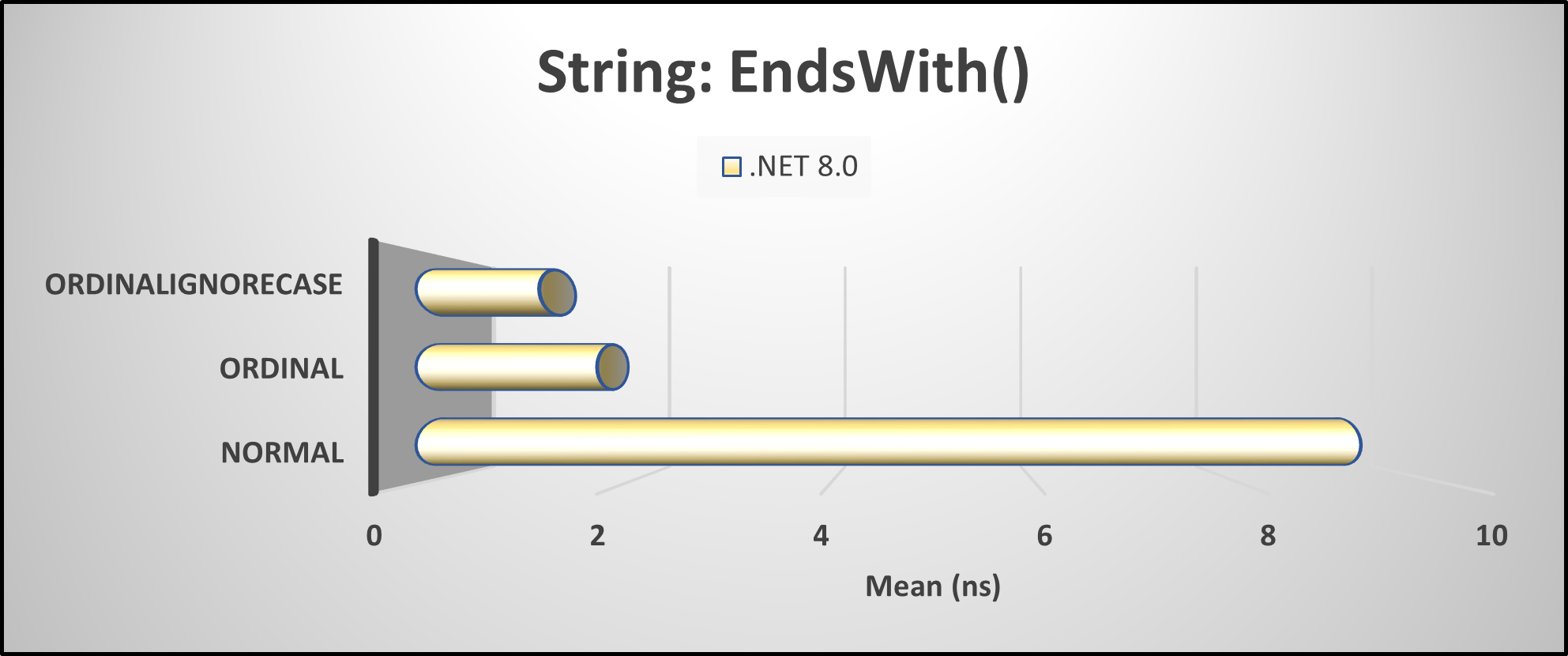
As evident in the performance analysis of EndsWith(), employing it with StringComparison.OrdinalIgnoreCase is 1.47 times faster than using StringComparison.Ordinal, and a notable 7.68 times faster compared to not specifying a StringComparison.
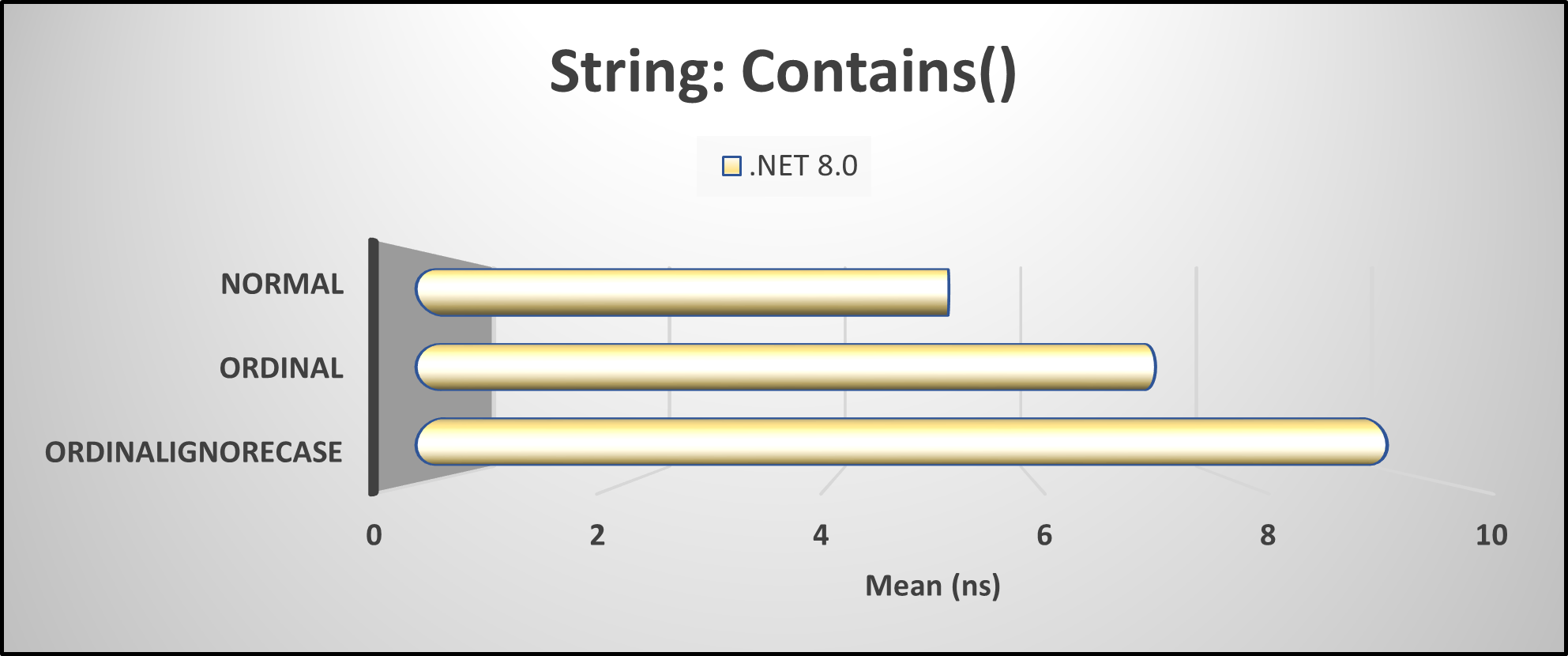
When utilizing Contains(), opting for no StringComparison specification proves to be the most performant, being 1.39 times faster than using StringComparison.Ordinal and 1.82 times faster than using StringComparison.OrdinalIgnoreCase.
For further information on checking for a substring, please consult the Internationalization and Localization chapter in my code performance book.
Pick up any books by David McCarter by going to Amazon.com: http://bit.ly/RockYourCodeBooks
Make a one-time donation
Make a monthly donation
Make a yearly donation
Choose an amount
Or enter a custom amount
Your contribution is appreciated.
Your contribution is appreciated.
Your contribution is appreciated.
DonateDonate monthlyDonate yearlyIf you liked this article, please buy David a cup of Coffee by going here: https://www.buymeacoffee.com/dotnetdave
© The information in this article is copywritten and cannot be preproduced in any way without express permission from David McCarter.
Discover more from dotNetTips.com
Subscribe to get the latest posts sent to your email.

 dotNetTips.com
The performance of Contains should vary significantly with the position of the substring within the master string. Using your example above, it should be very near in time to StartsWith and slightly faster (by clock cycles/nS) than EnddWith…