
If you don’t document your projects, how do you expect developers to build it, QA to test it, or tech support to help users without guessing?
With so many software development methodologies in play today, it’s easy to get swept up in trends and forget the fundamentals. Regardless of whether you’re following Agile, Scrum, Waterfall, or some hybrid approach, one truth remains: proper architecture and documentation must come before a single line of code is written.
Over the course of my career, I’ve seen methodologies come and go. And with some—especially Agile—I’ve seen a troubling trend: less and less documentation. Sometimes, no documentation at all.
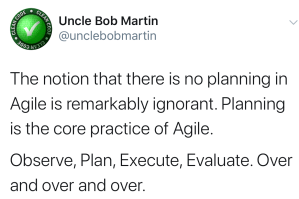
While writing this article, Uncle Bob Martin tweeted something that really hit home about Agile’s original intent and how it’s being misused. I agree with him 100%. Agile was never meant to mean “no planning.” But in my experience, many Agile teams skip proper planning entirely. That’s not Agile—that’s irresponsible.
When I’m in a meeting and I bring up the importance of documenting requirements and architectural design before coding begins, I sometimes get pushback. That’s when I ask a few simple but critical questions:
- How are developers supposed to write quality code without clear documentation?
- How is QA supposed to write effective tests without understanding the system?
- How is Tech Support expected to help users when there’s no documentation to guide them?
Now, imagine those team members are new hires or contractors—people without deep domain knowledge. Without solid documentation, how do they contribute effectively or onboard quickly? They can’t. And productivity suffers.
When I first learned to program, we didn’t write a single line of code until the requirements and design documents were completed and signed off by stakeholders. That was standard practice in the Waterfall methodology—and while it’s no longer the dominant model, the logic still holds.
The High Cost of Skipping Documentation
Some managers still believe that unless a developer is actively coding, they’re not working. That couldn’t be further from the truth. Coding is just one phase of the development lifecycle—and arguably, not the most critical one.
A study I read years ago included a chart I’ll never forget:
- If the user finds the bug, the cost skyrockets—over 150x higher.
- Fixing an issue in the requirements phase is cheapest.
- If you wait until the design phase, the cost doubles.
- By the time you reach the coding phase, it’s 10x more expensive.
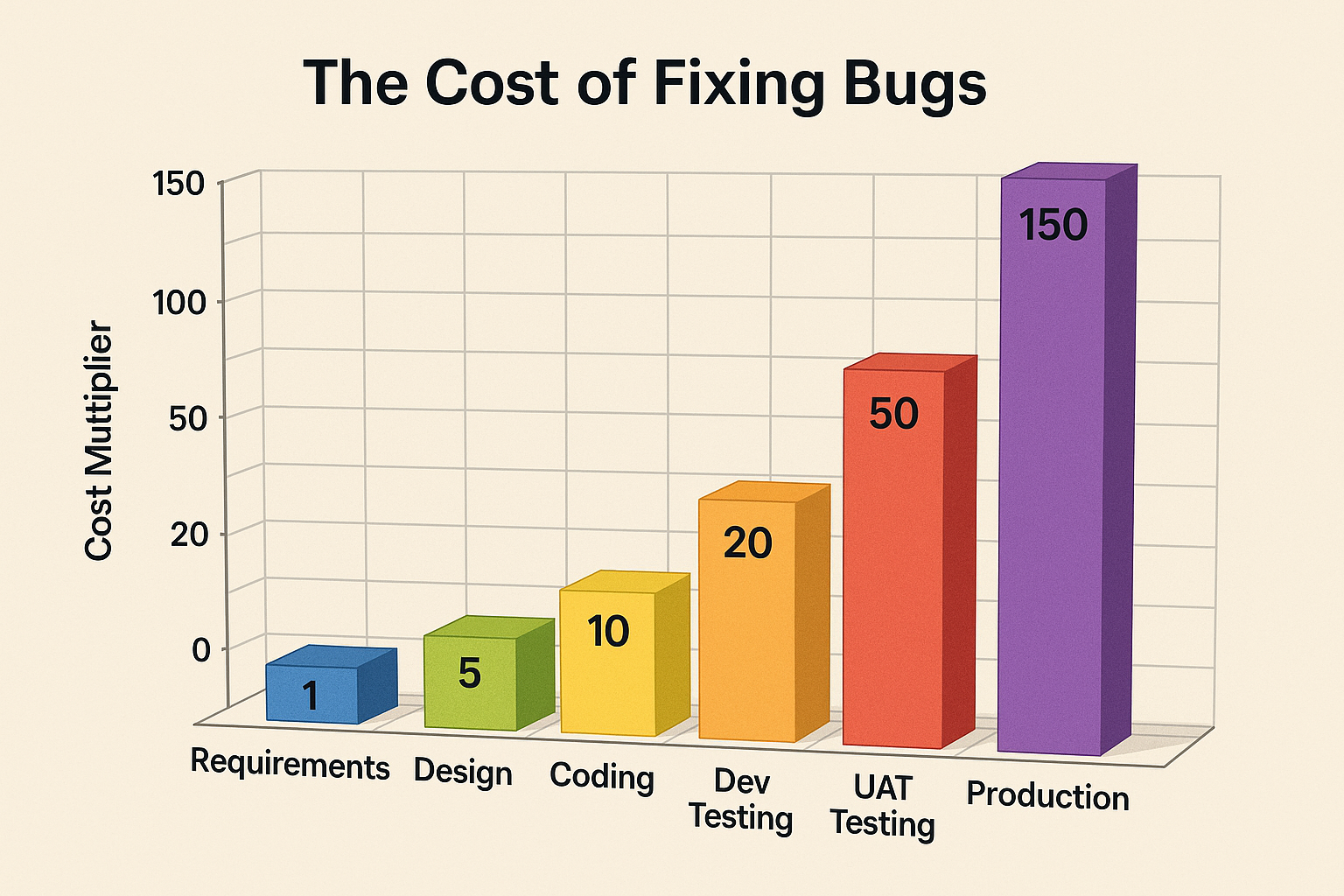
That’s not a rounding error. That’s the difference between success and disaster. Print that chart and tape it to your manager’s door—assuming they still have one.
Documentation ≠ Slack Threads
Let me be clear: email chains, Slack messages, and group chats are not documentation. They’re useful for gathering information, but they don’t replace formal documentation.
Real documentation is structured, reviewable, and accessible—ideally created using tools like Microsoft Word or Confluence. There are plenty of templates online to guide your team in writing solid requirements and architectural designs. Use them. Bonus: good documentation also helps reduce feature creep.
While I was writing this article, Peter Ritchie tweeted something just as relevant:
“Without proper planning, teams end up constantly patching software. That makes evolving the architecture nearly impossible.”
He’s right. That’s why so many teams—even at big companies like Microsoft—end up rewriting their software from scratch, sometimes under a new name. The original codebase becomes too rigid, too fragile, and too hard to extend—all because it wasn’t designed to evolve in the first place.

Pick up any books by David McCarter by going to Amazon.com: http://bit.ly/RockYourCodeBooks
Make a one-time donation
Make a monthly donation
Make a yearly donation
Choose an amount
Or enter a custom amount
Your contribution is appreciated.
Your contribution is appreciated.
Your contribution is appreciated.
DonateDonate monthlyDonate yearlyIf you liked this article, please buy David a cup of Coffee by going here: https://www.buymeacoffee.com/dotnetdave
© The information in this article is copywritten and cannot be preproduced in any way without express permission from David McCarter.
Discover more from dotNetTips.com
Subscribe to get the latest posts sent to your email.

 dotNetTips.com