
Yes, I said it: computers are dumb. And I don’t say that just because I write software. I say it because, at their core, computers only understand true (on) or false (off)—like an incredibly fast light switch.
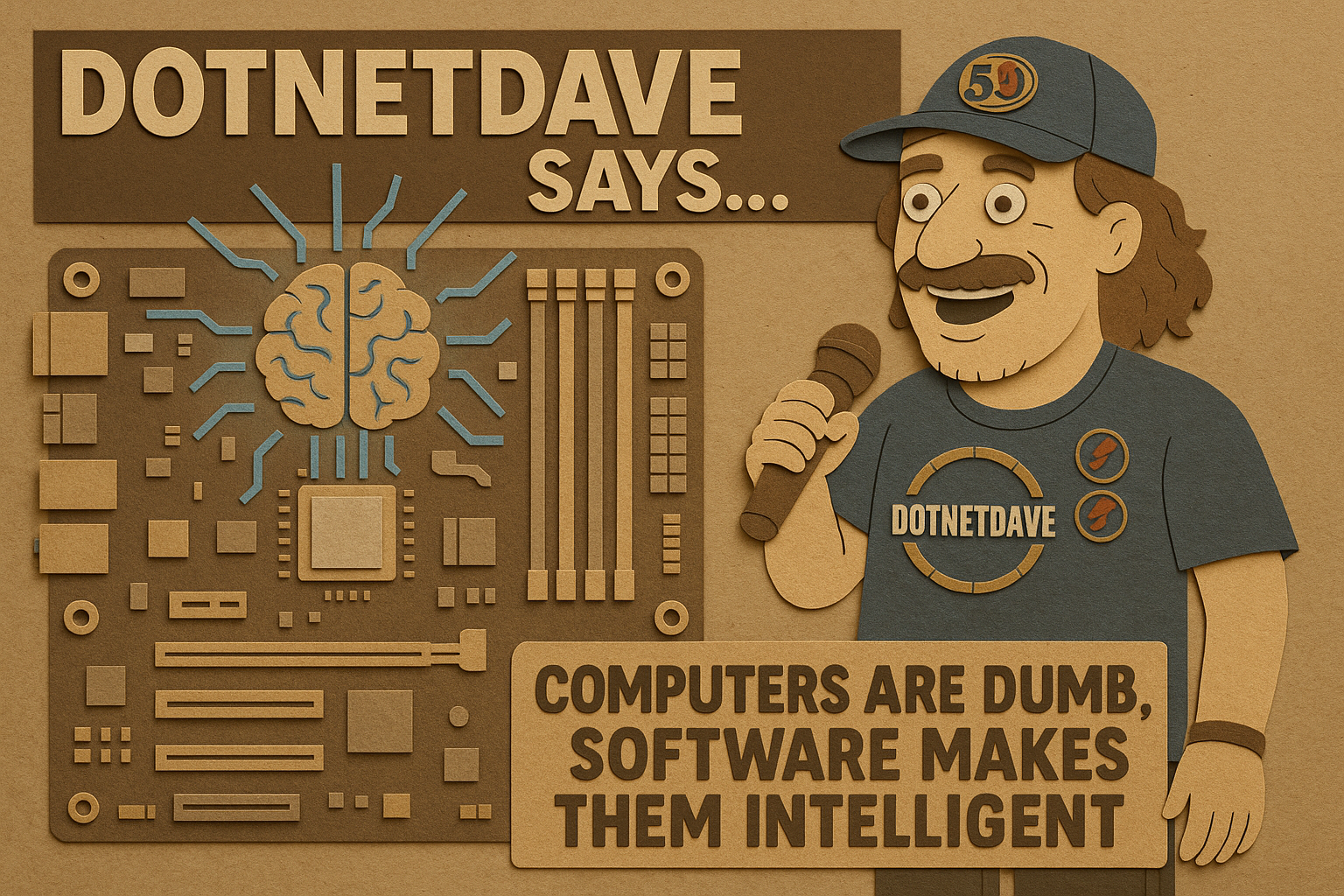
Now, don’t get me wrong. They’re very fast. Modern computers perform millions (and often billions) of calculations per second. In many ways, they can “think” far faster than humans. But here’s the key point: they don’t think on their own. It’s the software that tells them how to behave, how to decide, and how to appear intelligent.
Without software, a computer is just a very expensive paperweight.
Interestingly, if you step back and think about it, our brains aren’t all that different. Every day, we make thousands of binary decisions—yes or no, go or stop, safe or risky. We store information, retrieve memories, and react to inputs, not unlike a computer processing data.
Of course, I’m still not sure who wrote our software. I’ll leave that question to philosophers and science-fiction writers.
Thinking Beyond Traditional Computers
Before I became a software engineer, I worked for a biotech company in San Diego. One of the devices we built could detect extremely faint electromagnetic signals produced by the human brain. While I was there, a company from China purchased one of these devices with the goal of exploring whether computers could be built to operate more like the human brain.
I never found out what ultimately came of that effort, but the idea stuck with me. It raised an interesting question: what if computing didn’t have to be purely binary? What if machines could process information in a way that more closely mirrors human thought?
During my time at that company, I attended a conference where the keynote speaker was a physician from a prestigious medical college in New York. He used one of our devices in his research and spoke about how brainwave patterns differ fundamentally from what many people assume about human evolution. Whether you agree with his conclusions or not, it was a fascinating reminder that we still understand far less about the brain than we think we do.
A Thought Experiment
Imagine trying to design a steam-powered computer in the 1800s. The limitations alone force you to think differently. Constraints drive innovation—and sometimes, they push us toward entirely new models of thinking.
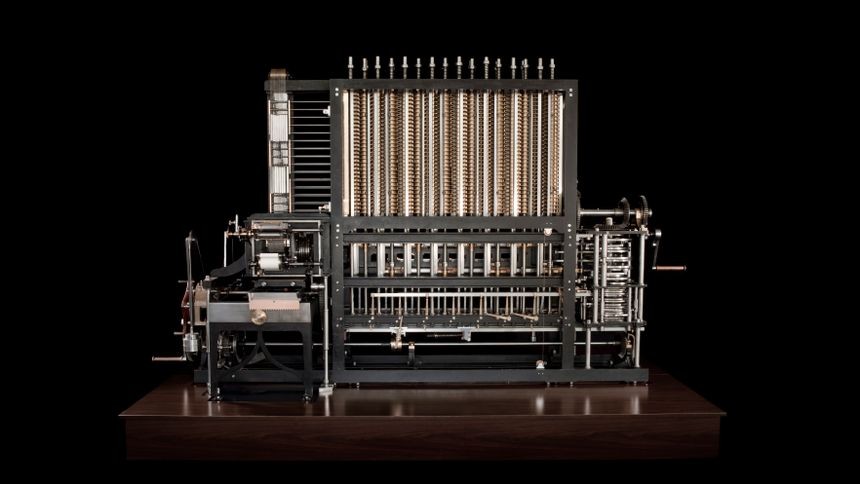
Modern computing may still be rooted in on/off logic, but our understanding of intelligence—both artificial and human—is constantly evolving.
So the next time you’re making a decision, pause for a moment. Ask yourself: is this a simple on/off choice, or something more nuanced? And then remember—no matter how fast computers become, it’s still humans who define the rules, write the logic, and decide what “intelligent” really means.
For now, computers are fast.
Software makes them smart.
And humans? We’re still debugging ourselves.

Pick up any books by David McCarter by going to Amazon.com: http://bit.ly/RockYourCodeBooks
Make a one-time donation
Make a monthly donation
Make a yearly donation
Choose an amount
Or enter a custom amount
Your contribution is appreciated.
Your contribution is appreciated.
Your contribution is appreciated.
DonateDonate monthlyDonate yearlyIf you liked this article, please buy David a cup of Coffee by going here: https://www.buymeacoffee.com/dotnetdave
© The information in this article is copywritten and cannot be preproduced in any way without express permission from David McCarter.
Discover more from dotNetTips.com
Subscribe to get the latest posts sent to your email.

 dotNetTips.com