
If you’ve ever attended one of my conference sessions, you’ve probably heard me say this more than once. I’ve been writing code for over 25 years, and this mindset has consistently made it easier to change, extend, and maintain software long after it was first written.
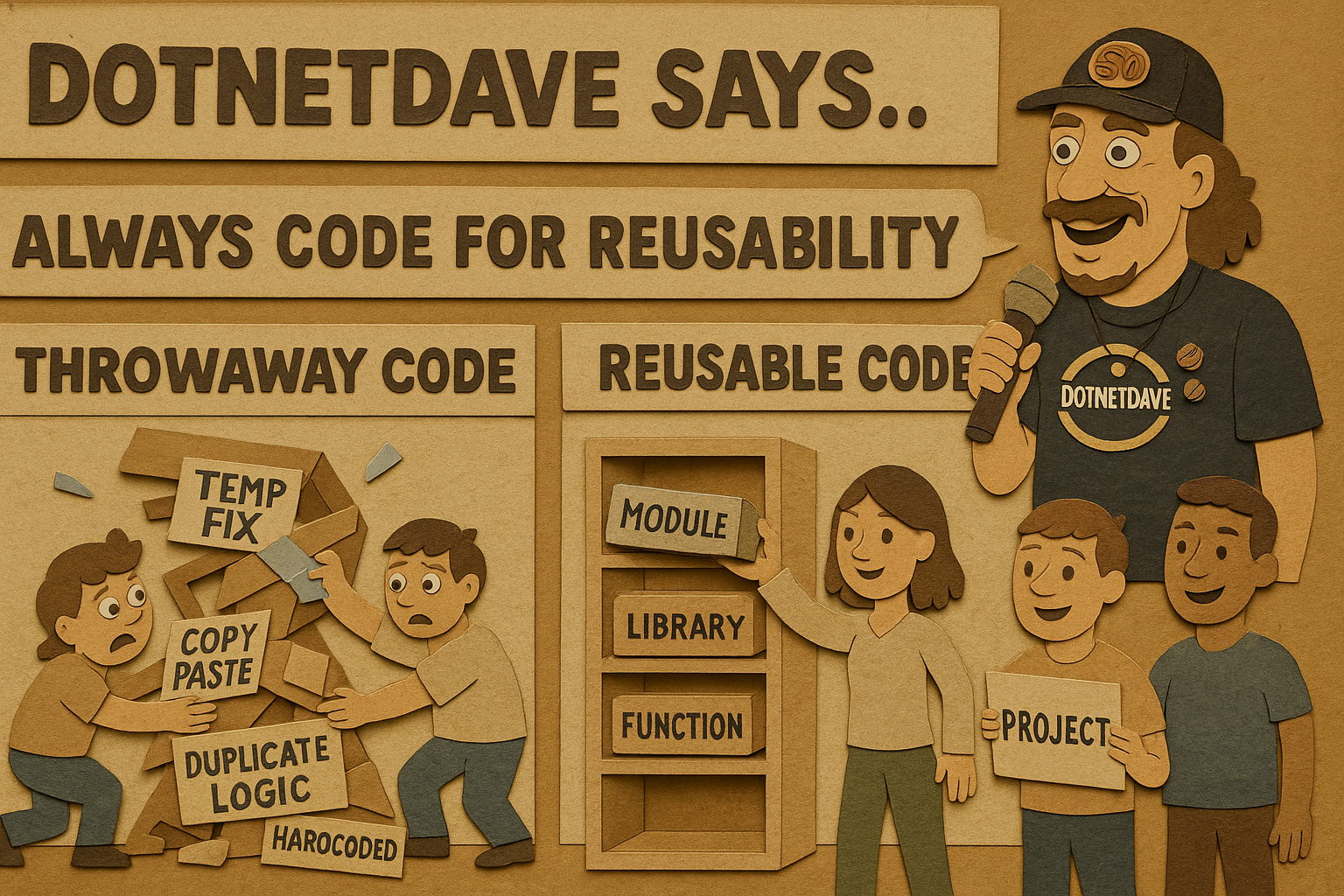
Always code as if your work will be reused.
That principle matters more than most developers realize.
On a project I was brought into just four months before its first release, the codebase was already a tangled mess of spaghetti code—so brittle that making even small changes was painful. And this was before version 1.0 shipped. To make matters worse, the project already had more than 5,000 code violations.
That didn’t happen overnight. It happened because the code was written with short-term thinking: “just get it working” instead of “someone will have to maintain this.”
Please—always write your types, methods, and even entire projects as if they will be reused someday. Because they probably will. The small amount of extra thought and effort you invest up front will save enormous amounts of time, frustration, and money down the road.
I can say this with confidence: future you—and everyone else who touches that code—will thank you.
There’s much more guidance on this topic throughout this site and in my coding standards book, where I dive deeper into writing reusable, maintainable, and professional-quality software.
Takeaway for Leads and Managers
If your codebase is already unmaintainable before version 1.0 ships, that is not a developer failure—it is a leadership failure.
Reusable, maintainable code does not happen by accident. It happens because leaders set expectations, enforce standards, and refuse to accept “just get it working” as a delivery strategy. When teams are rewarded for speed over quality, you don’t get innovation—you get technical debt with a release tag.
Leads and managers own the future cost of today’s decisions. Every shortcut you approve becomes tomorrow’s delay, outage, and rewrite. Every standard you fail to enforce becomes someone else’s emergency.
If you want reusable code, you must:
- Demand architectural discipline
- Enforce coding standards and code reviews
- Allocate time for quality, not just features
Otherwise, don’t be surprised when your roadmap collapses under the weight of your own shortcuts.
You don’t ship software once.
You pay for it every day after.

Pick up any books by David McCarter by going to Amazon.com: http://bit.ly/RockYourCodeBooks
Make a one-time donation
Make a monthly donation
Make a yearly donation
Choose an amount
Or enter a custom amount
Your contribution is appreciated.
Your contribution is appreciated.
Your contribution is appreciated.
DonateDonate monthlyDonate yearlyIf you liked this article, please buy David a cup of Coffee by going here: https://www.buymeacoffee.com/dotnetdave
© The information in this article is copywritten and cannot be preproduced in any way without express permission from David McCarter.
Discover more from dotNetTips.com
Subscribe to get the latest posts sent to your email.

 dotNetTips.com
You must be logged in to post a comment.